Programs
Key programs
Refugee social integration
We support refugees in adapting to their local communities by fostering connections and mutual learning among refugees, local governments, and civil society, helping them avoid marginalization where they live and work.
Asian refugee community support
We raise awareness among Asians about refugee displacement caused by conflict or oppression and the rights of refugee communities, supporting refugee communities that cultivate peace for future generations.
Peace and human rights education
To align views on migrants and refugees with the principles and standards of universal human rights, we cultivate values and wisdom for peacefully resolving potential conflicts between unfamiliar neighbors. We foster mutual understanding between refugee and host communities.
Refugee settlement support
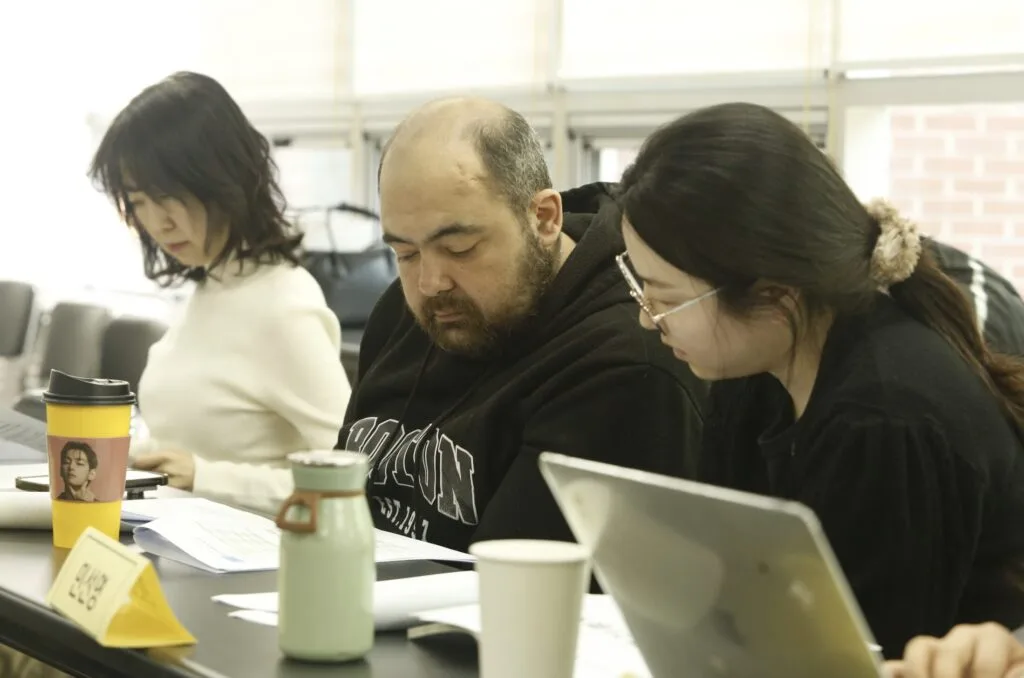
To reduce the difficulties refugees face in the early period after first arriving in Korea, MAP provides counseling and linkage to resources, multilingual Refugee News, and support for households in housing crisis. The work is for refugees of every residence status in Korea.
Refugee News, Uri Peace Korean Language School
Refugee health and mental health
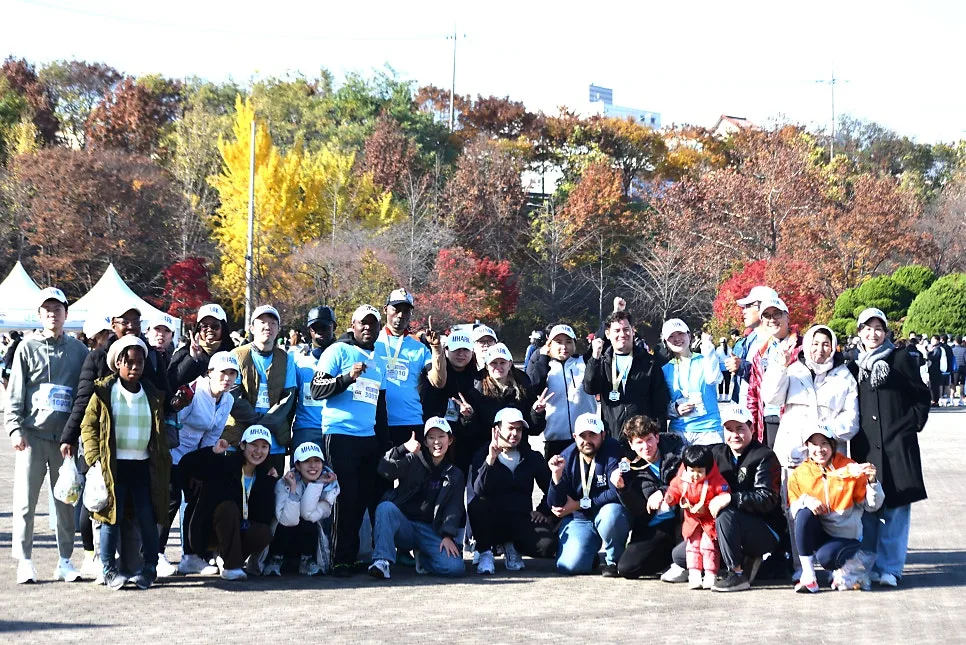
MAP sees refugees’ health as a right and not only a matter of treatment, and carries out linkage to medical interpretation and guidance on the system, mental health and psychosocial support, medical cost support for refugee children, and work in a consortium for the right to health. The work is for refugees of every residence status in Korea.
Mental health and psychosocial support
Refugee children’s rights
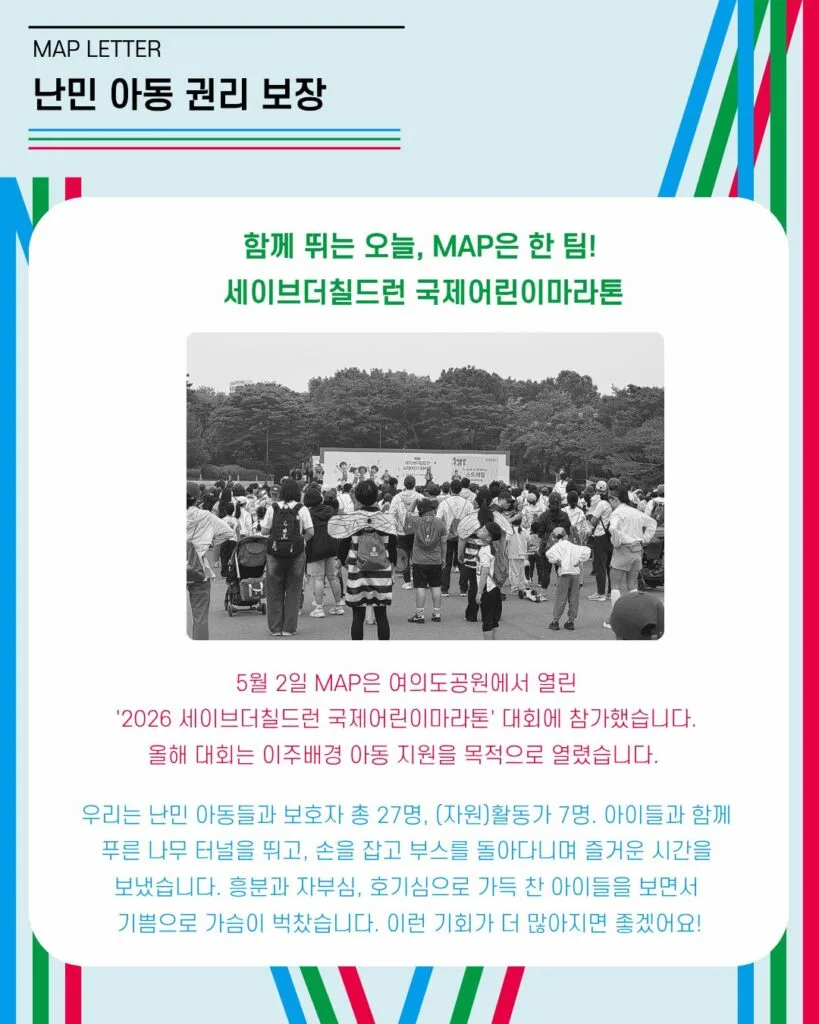
MAP runs support for refugee children on the principle that every child should be able to grow up with dignity, whatever their nationality or residence status. It provides childcare and child-rearing support for preschool children, child-rearing and medical cost support for infants up to 18 months old, an emotional support program for child caregivers (Dear Mommy), and support for children in crisis.
Refugee empowerment
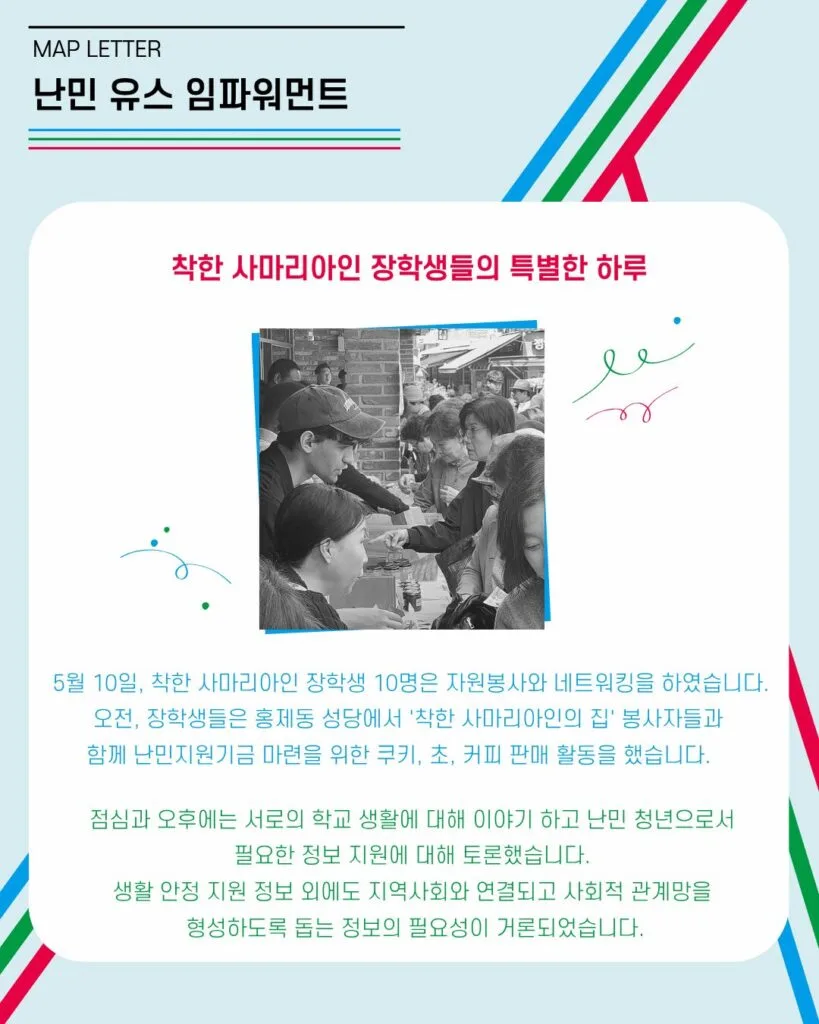
MAP sees refugees as decision-makers in their own lives and agents of social change, not as recipients of aid, and supports education, career paths and community participation centered on refugee youth and young adults and on activists who are refugees themselves. Scholarships, youth and young adult programs, the Peace Academy and participation in the Refugee Reference Group belong to this work.
Good Samaritan Scholarship
Refugee rights advocacy and solidarity
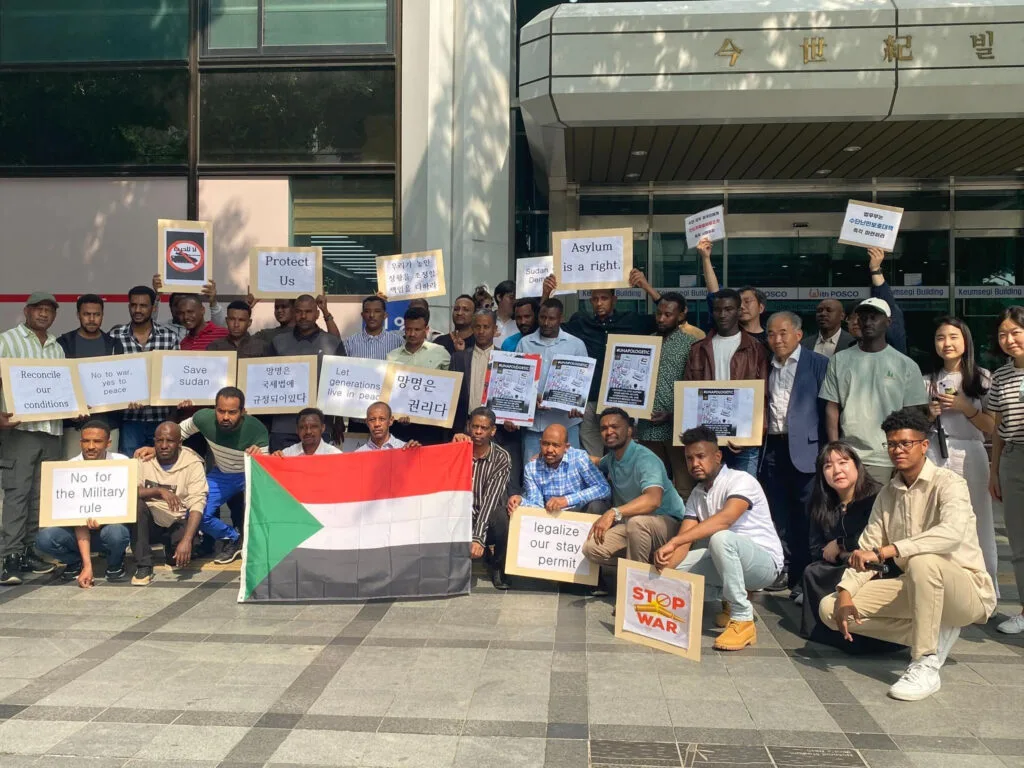
MAP makes advocacy, which intervenes directly in social structures and institutions beyond support to individual refugees, a core strategy. Together with domestic and international civil society networks such as the Korea Refugee Rights Network and the Migrant Detention Response Network, it carries out joint statements, press conferences, monitoring, campaigns, research and education.
Solidarity
Inclusive society
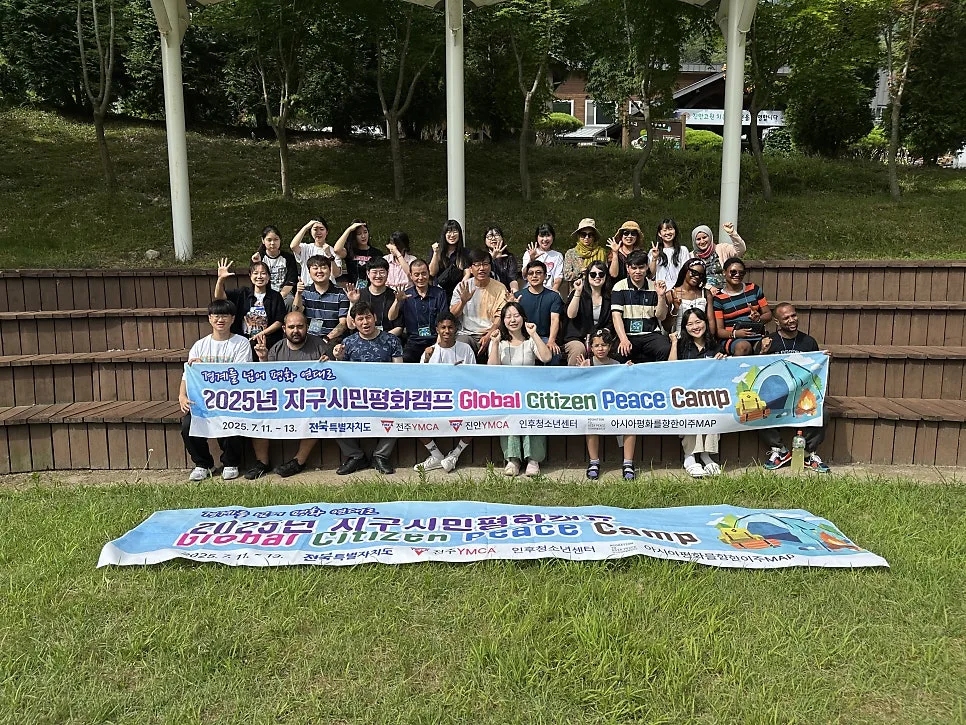
This is the project of awareness raising, education and connection that MAP runs to reduce misunderstanding and fear of refugees and to build the social foundation on which refugees and citizens can live together. It is for youth and young adults, citizens, volunteers, practitioners who assist refugees, and activists who are refugees themselves.
Newsletter: Displaced
Dialogue with Refugees
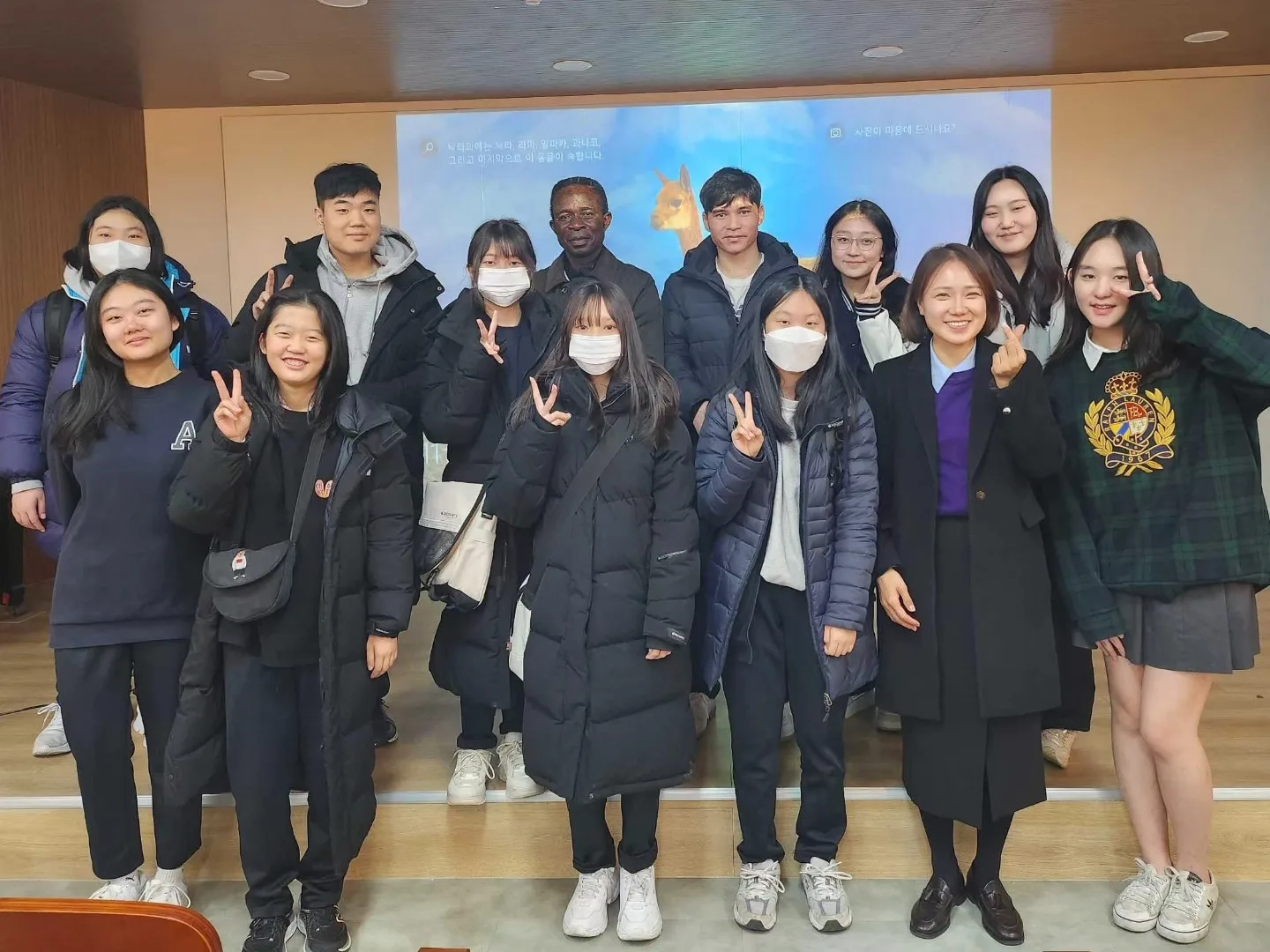
In this program, people living in Korea as refugees serve as speakers who tell the stories of their lives and exchange questions and stories with the citizens who take part. Refugee speakers go in person to the places that invite them, such as schools, libraries, clubs and institutions, and online sessions can be requested from overseas as well.