Q1. Please give a brief self-introduction and share your motivation for applying to MAP!
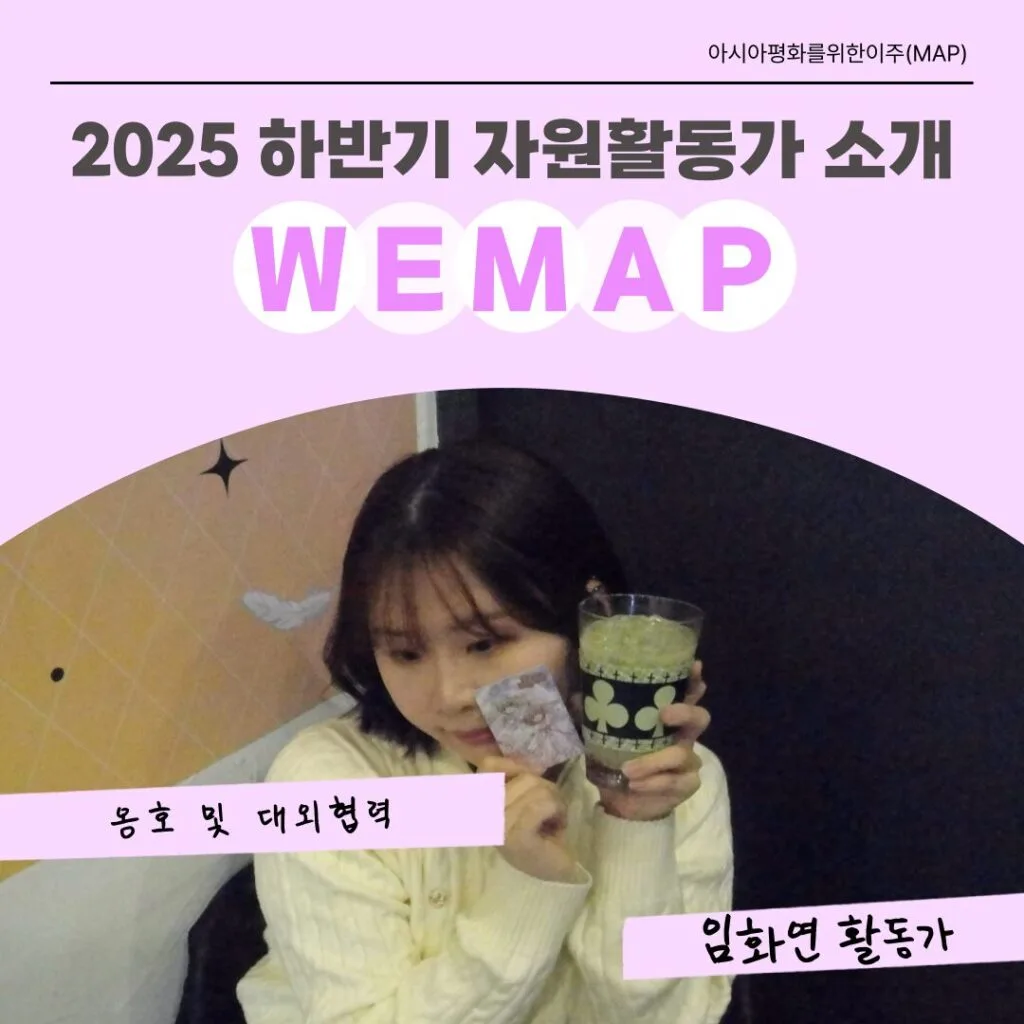
Hello. I am Lim Hwa-yeon, a second-half 2025 volunteer at Migration to Asia Peace (MAP). I have liked helping others since I was young, so I even ran a volunteer club myself! At university I am majoring in Chinese language and literature and international studies, and it was especially in an international studies class that I learned about refugees and wanted to help them too. Then I saw MAP’s volunteer recruitment notice, and I applied because I thought it was a good opportunity to help refugees as a student!
Q2. What specifically do you do on your current team?
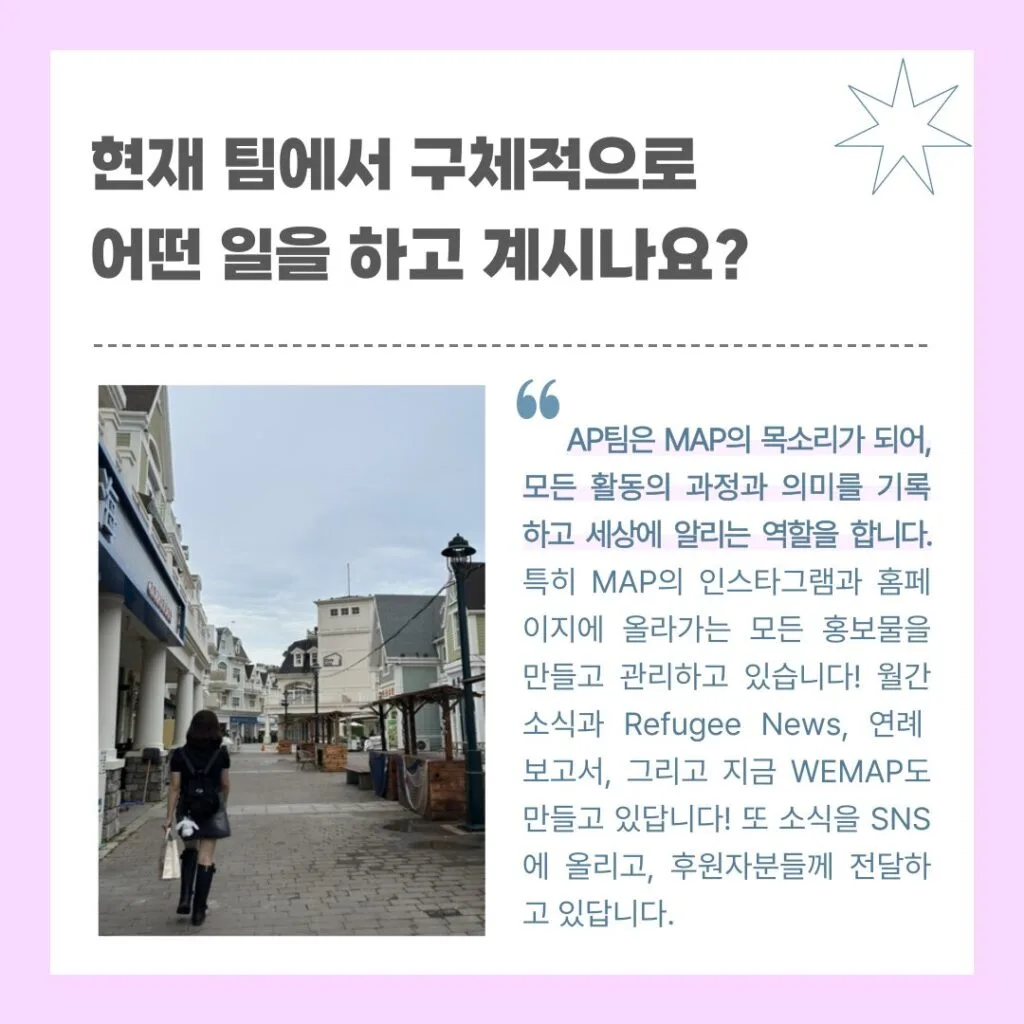
The AP Team serves as the voice of MAP, recording the process and meaning of all of its activities and making them known to the world. In particular, I create and manage all of the promotional materials posted on MAP’s Instagram and website! We are also making the Monthly News, Refugee News, the annual report, and now WEMAP. We also post news on social media and deliver it to supporters.
Q3. What has been the most memorable moment for you so far?
What I remember most is visiting Good Samaritan’s House in Uijeongbu in July with other volunteers. After making a home visit together, we moved to Good Samaritan’s House and helped with the work. The food that was made for us then was so delicious that I still cannot forget it. Afterward we also had time to talk together. It was a moment in which I felt firsthand that refugees are not different from me, that they are people who live each day with effort. From that day on, I think I took more pride in what I do and tried to take part more actively 🙂
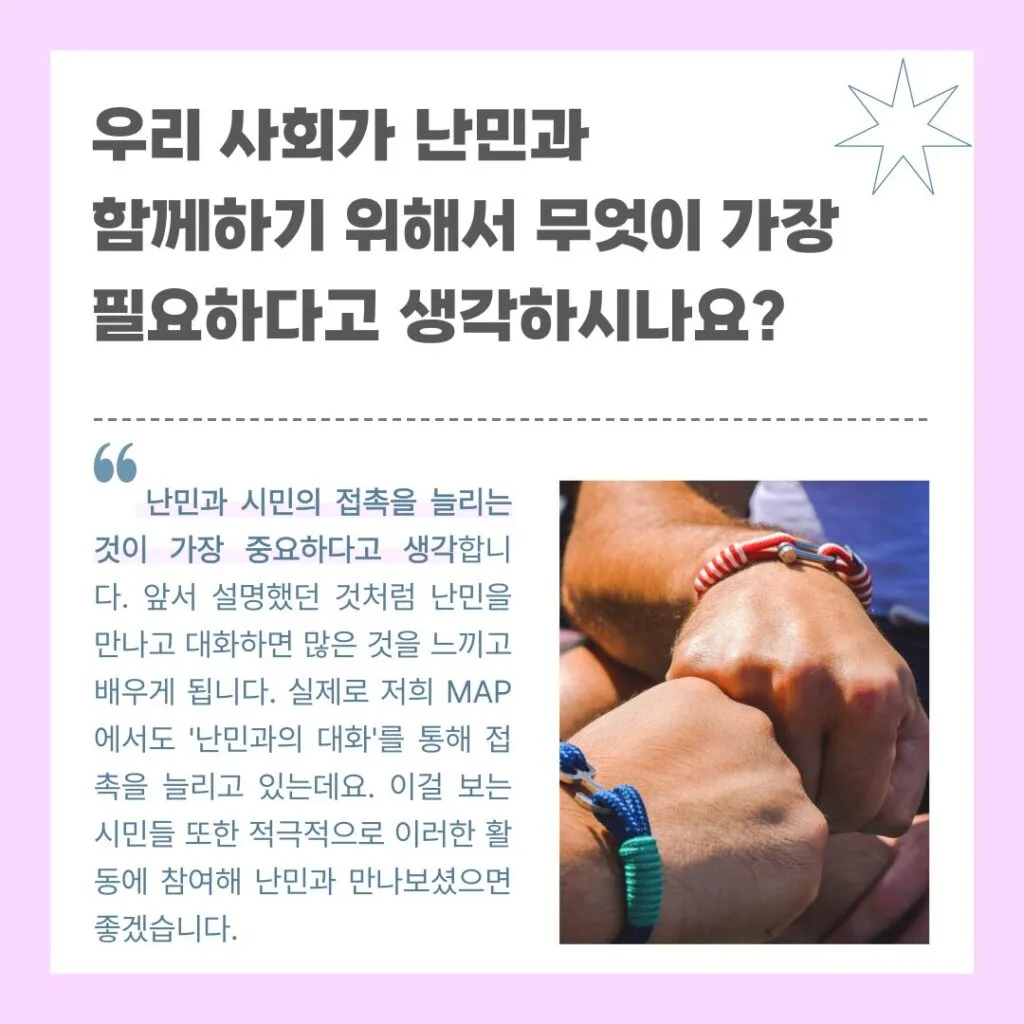
Q4. What do you think our society needs most in order to live together with refugees?
I think the most important thing is to increase contact between refugees and citizens. As I explained earlier, when you meet and talk with refugees you feel and learn a great deal. In fact, MAP is also increasing contact through “Dialogue with Refugees,” and I hope that the citizens who see this will also actively take part in such activities and meet refugees.
Q5. What ‘change’ have you felt while being active at MAP? Or what ‘change’ would you like to make?
Through my activities at MAP I was given a new way of seeing the world. I first learned about refugees after entering university, and my understanding of them deepened when I began as a MAP volunteer. In particular, I now find myself being the first to bring up refugee topics with my friends. If I had not been with MAP, I probably would not have known this new change!
Q6. How do you think MAP should approach people who find the refugee issue difficult?
I mentioned “Dialogue with Refugees” in my earlier answers, and I think it would be good for other teams as well to reach out so that more citizens can come into contact with refugees more often. The AP Team also records and shares MAP’s many activity sites vividly, and we want to play the role of connecting refugees and citizens. I think an important role of ours is to let even those who cannot take part directly feel indirectly, through our content, how enjoyable and meaningful it is to interact with refugees 🙂