Q1. Please give a brief self-introduction and tell us why you applied to MAP.
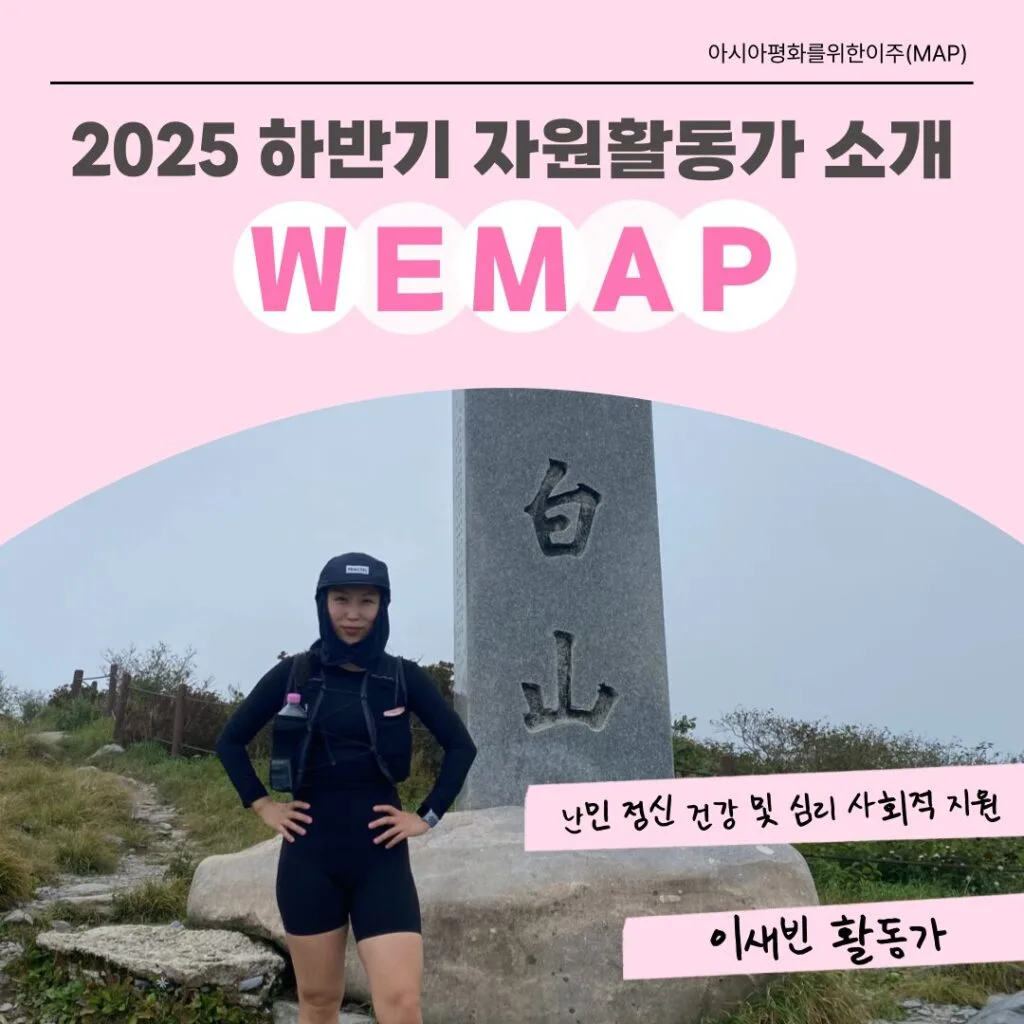
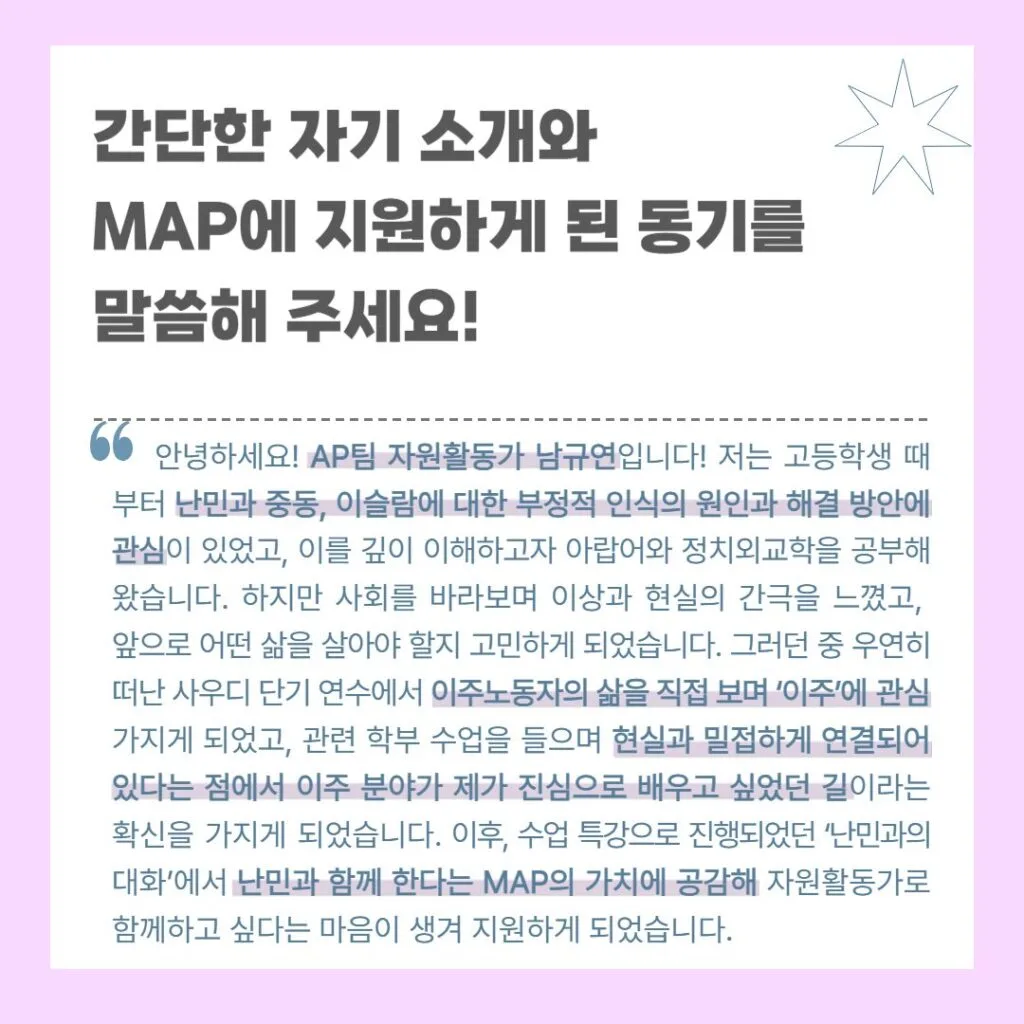
Hello. I am Lee Sae-bin, a member of MAP’s MHPSS Team in the second half of 2025. I have long been interested in health equity and public health, especially the health problems of vulnerable groups. Their difficulties are not simply personal problems but are closely entangled with structural factors such as language barriers, lack of access to health care, and social exclusion. In particular, refugees who came to Korea to escape conflict and discrimination face mental and physical difficulties at the same time in a new environment, and I believe their health is also a right that must be guaranteed. I felt that working on the MHPSS Team would be a place where I could turn this awareness into real support, so I applied.
Q2. What exactly do you do on your current team?
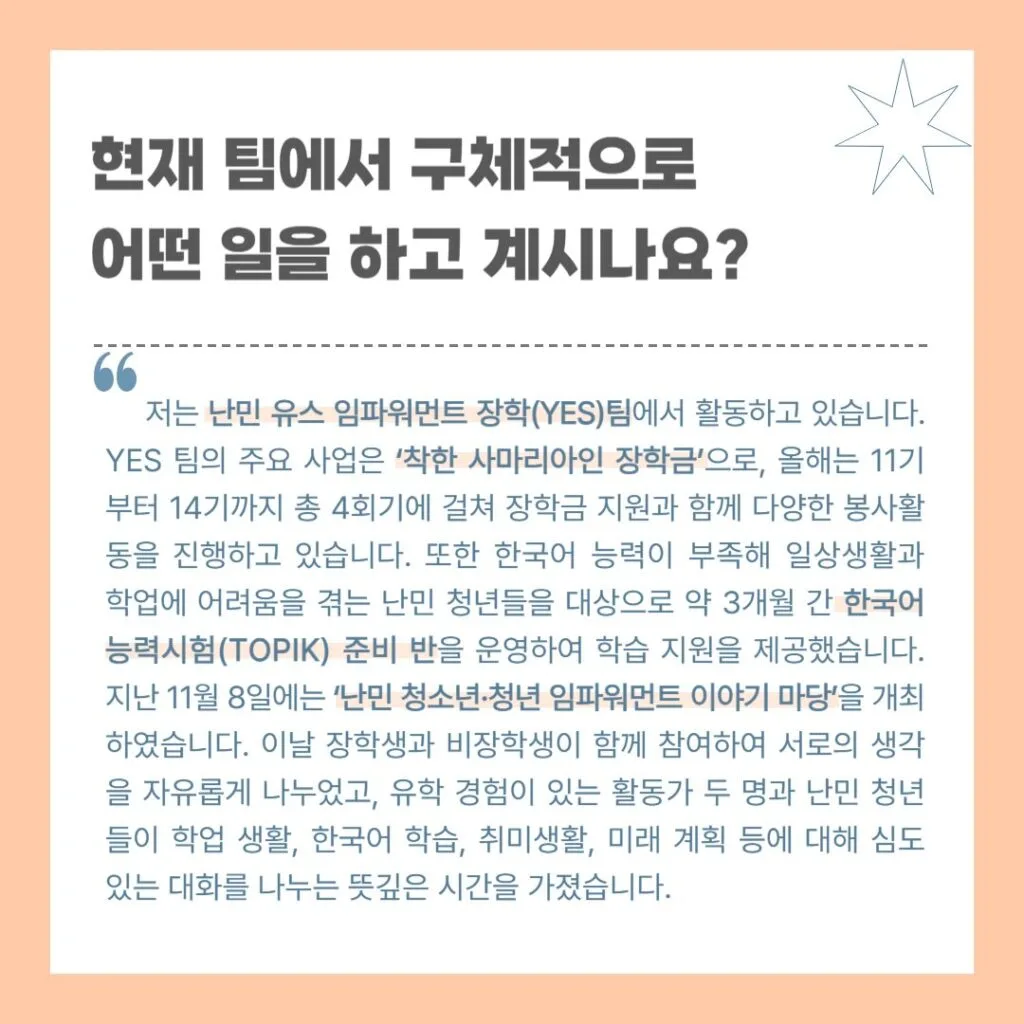
On the MHPSS Team, I am in charge of identifying the mental and physical health problems of refugees and connecting them to the medical and psychological support they need. I consult with new visitors and applicants for support about their situations, and together we coordinate the necessary treatment, medical institutions, and resources that can be linked, and I regularly monitor those who need long-term support. I also provide practical support so that health-related difficulties, such as inquiries about medical expenses and consultations about moving to another hospital, can be resolved quickly. Recently, I took part in an event hosted by KBS and the Korean Neuropsychiatric Association, helping refugees connect more naturally with the local community. Through these various activities, I am contributing to building a practical support system that helps refugees recover their daily lives.
Q3. What has been the most memorable moment for you so far in your activities?
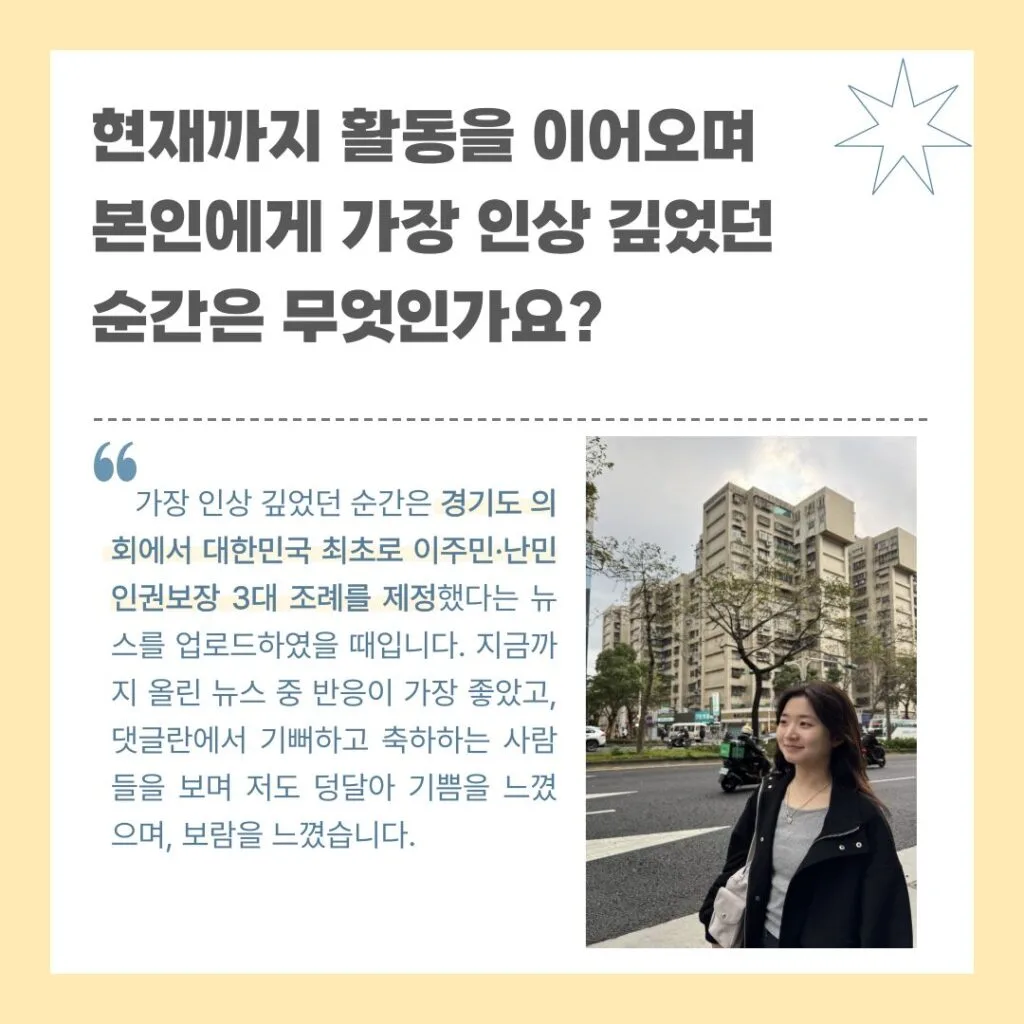
The most memorable moment was an experience of urgently connecting a woman who was 39 weeks pregnant to a medical institution. Alongside my work at MAP, I was also volunteering as a PA (patient assistant) at the Raphael Clinic, a free clinic for foreign workers, and I took part in the whole process there, from first helping with the woman’s examination to then connecting her to MAP. She needed a safe place to give birth immediately, so the MHPSS Team quickly coordinated the necessary support in cooperation with medical and social welfare resources. When I later heard that she had given birth safely, I was overcome with great relief and gratitude. This experience made me realize once again how much “connected support” means to people in vulnerable situations.
Q4. What do you think our society needs most in order to live together with refugees?
I think we need to expand the “points of contact” where refugees and citizens can meet. Many people think of refugees only as figures in the news, but when they actually meet, the range of mutual understanding and empathy grows. For example, there should be more opportunities for citizens to connect naturally with the lives of refugees, such as taking part in local community events, awareness education at schools, hospitals, and public institutions, and media content in which refugees’ voices can be heard in everyday life. I think only when such points of contact build up can refugees be seen not as “outsiders” of our society but as neighbors who live together with us. Ultimately, I believe such change will also be an important foundation for refugees’ stable settlement and healthy lives.
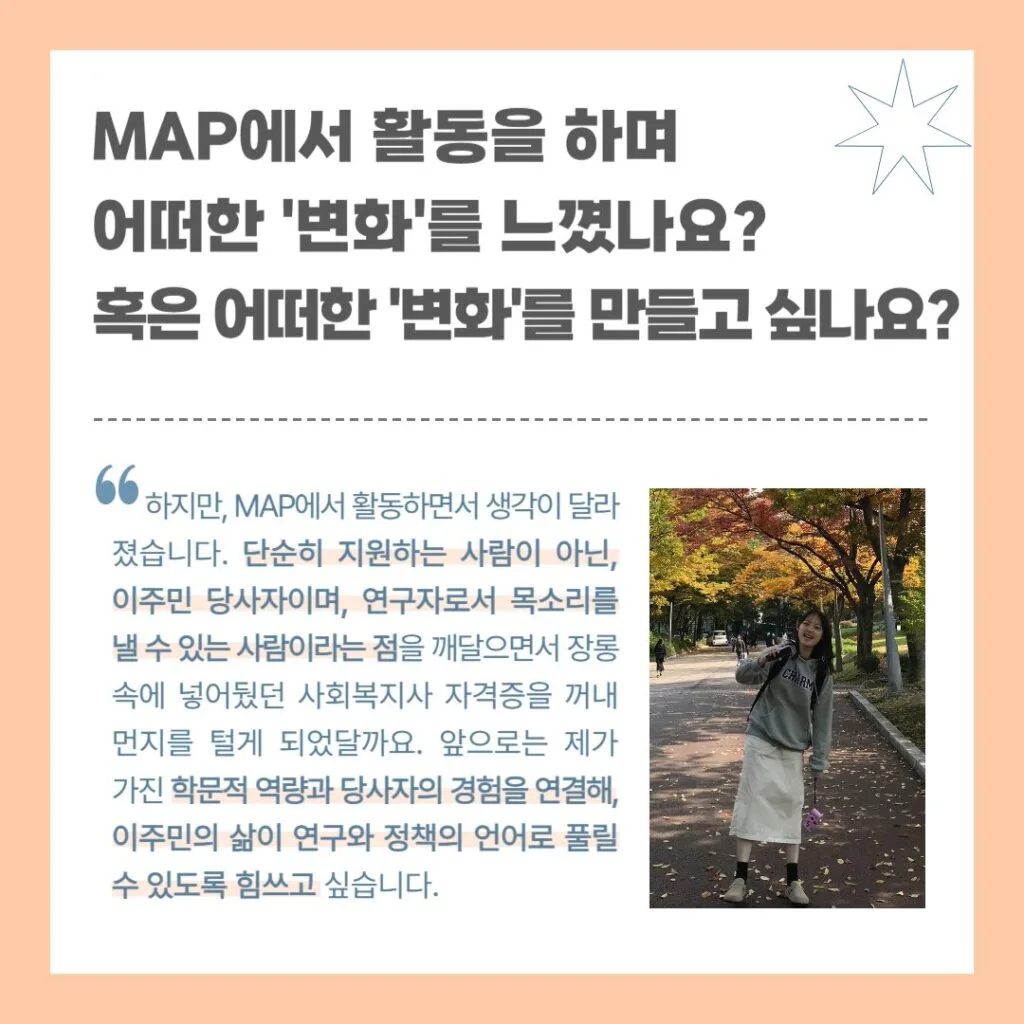
Q5. What “change” have you felt while volunteering at MAP? Or what “change” do you want to make?
Through my work at MAP, I became convinced that my global health experience, my public health perspective, and my nursing knowledge can become practical tools for guaranteeing someone’s rights. By thinking and coordinating together about what is needed from the refugee’s point of view, I was able to experience firsthand the moments when a small connection brings about a change in someone’s life. Based on my experience at MAP, I want to help ensure that the health problems and everyday difficulties faced by socially vulnerable groups do not stop at short-term support but lead to structural solutions. I want to build a linkage system in which medical, psychological, and social welfare resources continue without interruption, and to serve as a bridge between research and practice so that policies and institutions can reflect real voices.
Q6. How should MAP approach people who find the refugee issue difficult?
I think it is important for MAP to approach people who find the refugee issue difficult first with familiar formats and content that places no burden on them. For some people the refugee issue can feel heavy and complicated, so I felt that approaches they can encounter naturally in daily life, such as short videos, card news, and interviews, are effective. I expect these efforts by MAP to become an important foundation for future generations as well. If an environment is created in which children, teenagers, and university students can accept the refugee issue as a familiar social topic, the next generation will have greater sensitivity and inclusiveness. I hope that MAP will expand its activities in various ways in the future and create a flow in which more people naturally take an interest.