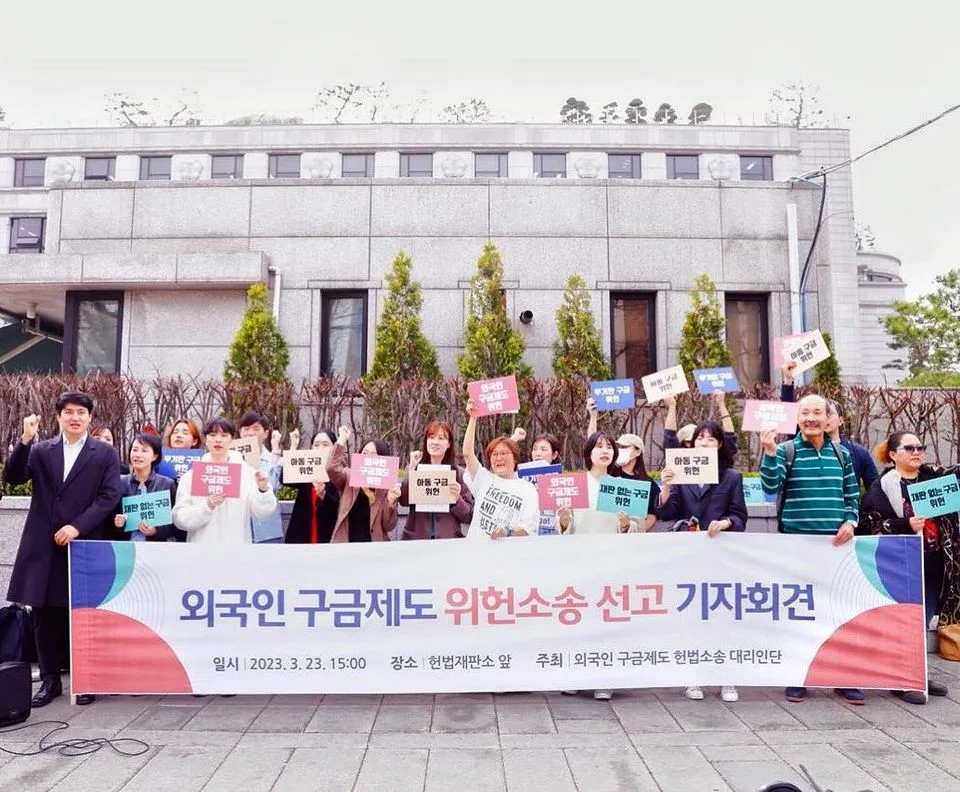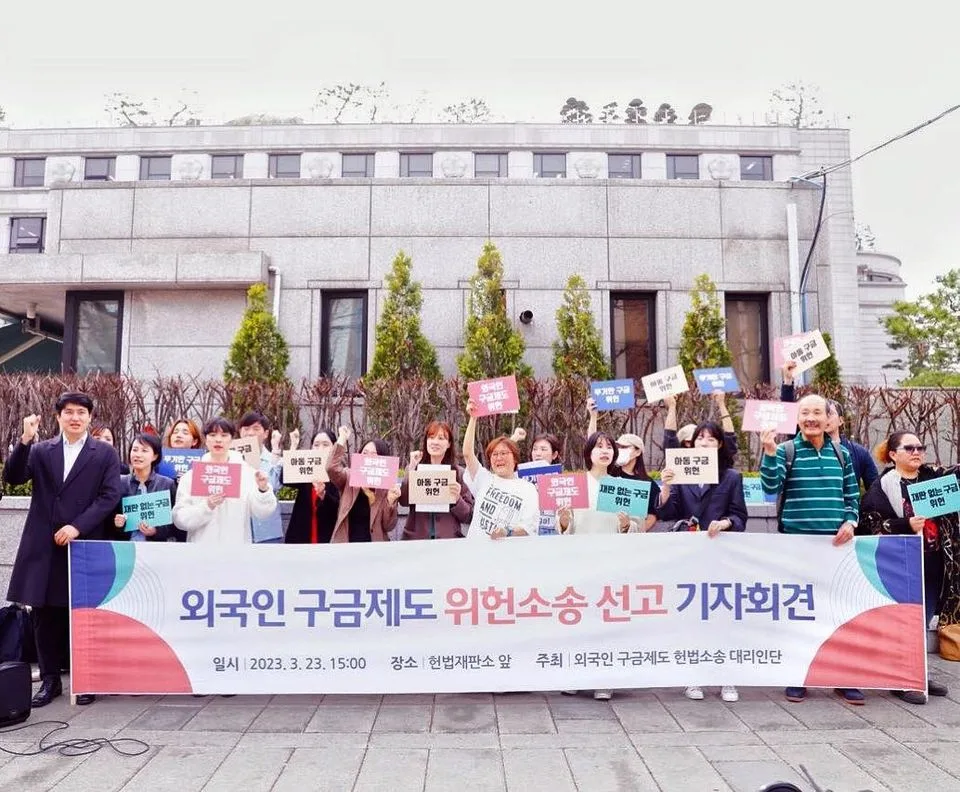
On March 23, 2023, the Constitutional Court ruled Article 63(1) of the Immigration Act unconstitutional, on behalf of children with experience of detention and refugee applicants. This decision removes a provision that allowed the indefinite detention of migrants, including migrant children and asylum seekers, without due process considerations such as review by an independent authority. We welcome the decision of the legal representatives before the Constitutional Court on immigration detention.
Under Article 63(1) of the Immigration Act, a person subject to a detention order can be detained without regard to age, asylum status, vulnerability or flight risk. The lack of involvement of an independent third party such as a court in the detention decision, and the absence of an upper limit on the length of detention, led to serious human rights violations. For example, a 10-month-old infant was detained for two months, with visits from the father limited to one hour a day, and a person who had been persecuted in their home country was detained for four years without legal assistance. Korea’s immigration detention system has been criticised by several UN bodies, including the Committee on the Rights of the Child, the Committee on the Elimination of Racial Discrimination and the Committee against Torture, which urged improvement. The National Human Rights Commission of Korea has also cited the current system as a human rights violation and issued a recommendation to amend the provision.
Today’s ruling of unconstitutionality aims to prevent such human rights violations from occurring in the future. In this respect, it is important to amend the immigration law so that it conforms to the decision of the Constitutional Court and promotes human rights. Specifically, the law must be amended to reflect international human rights standards that completely prohibit the detention of migrant children. Following the decision, it is important for the National Assembly and the executive to refer to precedents and set a reasonable upper limit on the length of detention – Taiwan has 100 days and Israel has 90 days – and to amend the law carefully and thoroughly so that violations such as those found by the Constitutional Court do not recur in response to similar decisions.
Nelson Mandela once said, “No one truly knows a nation until one has been inside its jails.” Today’s decision represents a step toward making Korea a country that respects human rights and does not violently detain migrants. We hope that this decision will catalyse further progress and improvement in the promotion and protection of human rights in Korea.
Legal representatives before the Constitutional Court on immigration detention