Q1. Please give a brief self-introduction and share your motivation for applying to MAP!
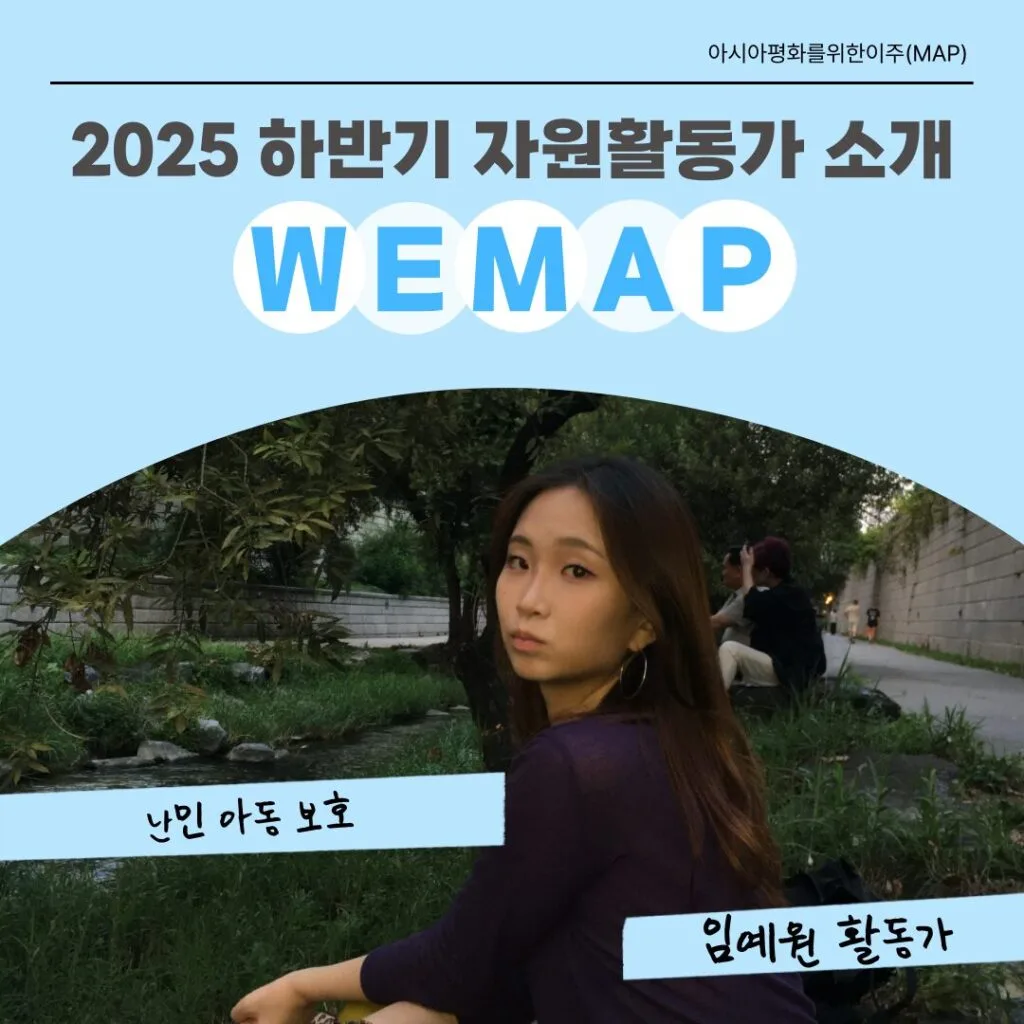
Hello. I am Lim Ye-won, a second-half 2025 volunteer at Migration to Asia Peace. I am on the CP Team, which runs support programs for refugee children’s child-rearing, childcare, and medical costs. Last year, when I went to the Czech Republic as an exchange student, I met a Ukrainian friend who had come to study abroad because of the war, and I realized that refugees are by no means distant from me. That experience made me interested in refugee issues, and I applied to MAP hoping to be of help by drawing on my major, child and adolescent studies.
Q2. What specifically do you do on your current team?
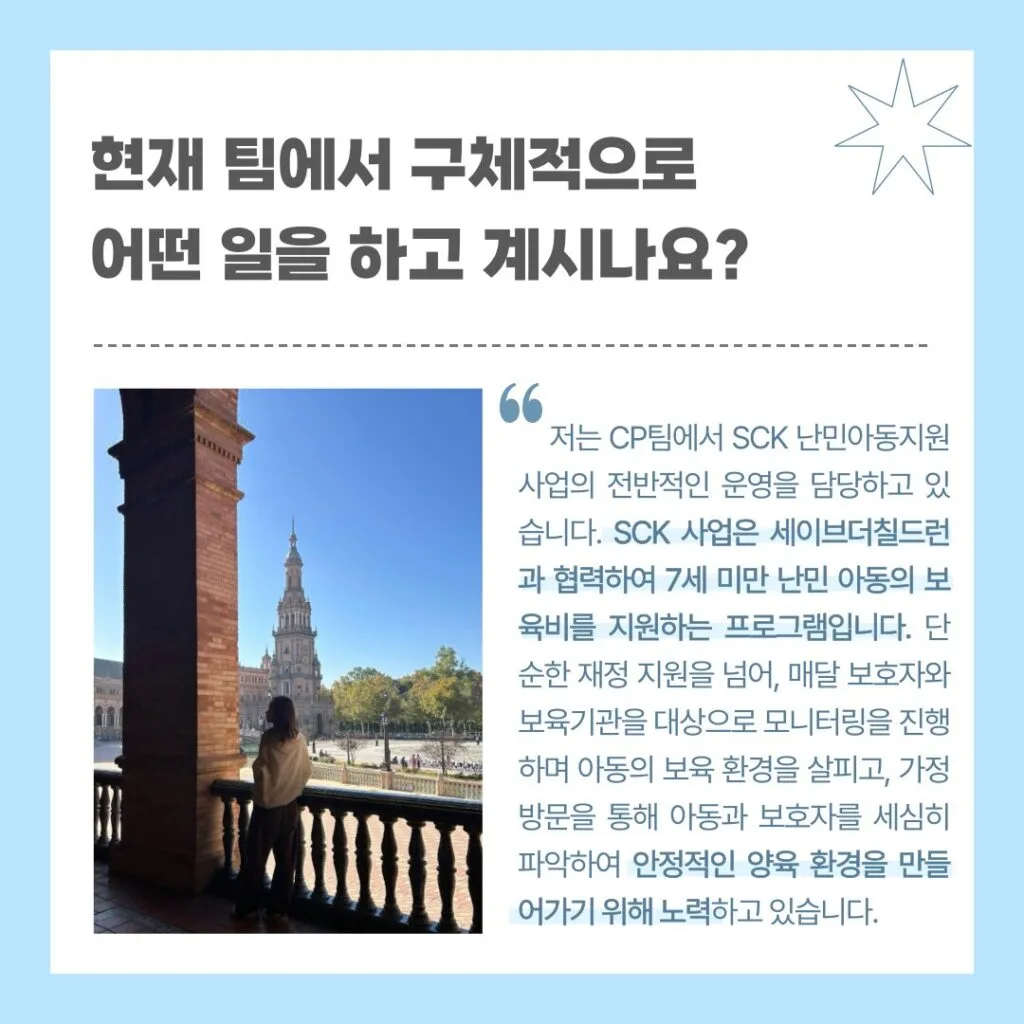
On the CP Team I am in charge of the overall operation of the SCK Refugee Children Support Program. The SCK program works in cooperation with Save the Children to support the childcare costs of refugee children under the age of 7. Beyond simple financial support, we conduct monthly monitoring of guardians and childcare institutions to check the children’s childcare environment, and through home visits we carefully understand the children and guardians and strive to create a stable child-rearing environment.
Q3. What has been the most memorable moment for you so far?
The first home monitoring activity I carried out in July left the strongest impression. It was my first home visit, held less than a week after the official activities began, so tension and worry came first until just before I arrived. The schedule, in which we first visited a psychological counseling center together for the child’s psychological assessment and then carried out the home monitoring, was not easy, but spending half a day beside a refugee family and blending into their daily life was a precious time. In particular, I think I will never forget, even after a long time, the warm heart of the guardian who treated us to food, saying “Thank you so much for today.”
Q4. What do you think our society needs most in order to live together with refugees?
I think what is most needed is to lower the threshold for recognition of refugee status. The main reason refugees experience social isolation is that they are excluded from basic social institutions such as health insurance, employment, and education, and this exclusion ultimately leads back to the fundamental problem of the difficulty of the refugee recognition procedure. Therefore, I think that expanding the acquisition of refugee status, through practical improvements in the procedure such as shortening the review period together with broader remedies during the review process, is an important first step toward living together with refugees.
Q5. What ‘change’ have you felt while being active at MAP? Or what ‘change’ would you like to make?
Rather than simply looking at life optimistically as I used to, I have added a little weight to it. By hearing, seeing, and experiencing things directly through my activities, I have also come to understand news about refugees more deeply. I was also able to learn how to communicate sincerely with people. At first I thought, “They are really different from me,” because of refugees’ diverse backgrounds, but after talking with them and looking more closely, I realized, paradoxically, that they are different and yet not so different from me. Based on this realization, I hope for a society in which refugee children can live with pride as members of Korean society.
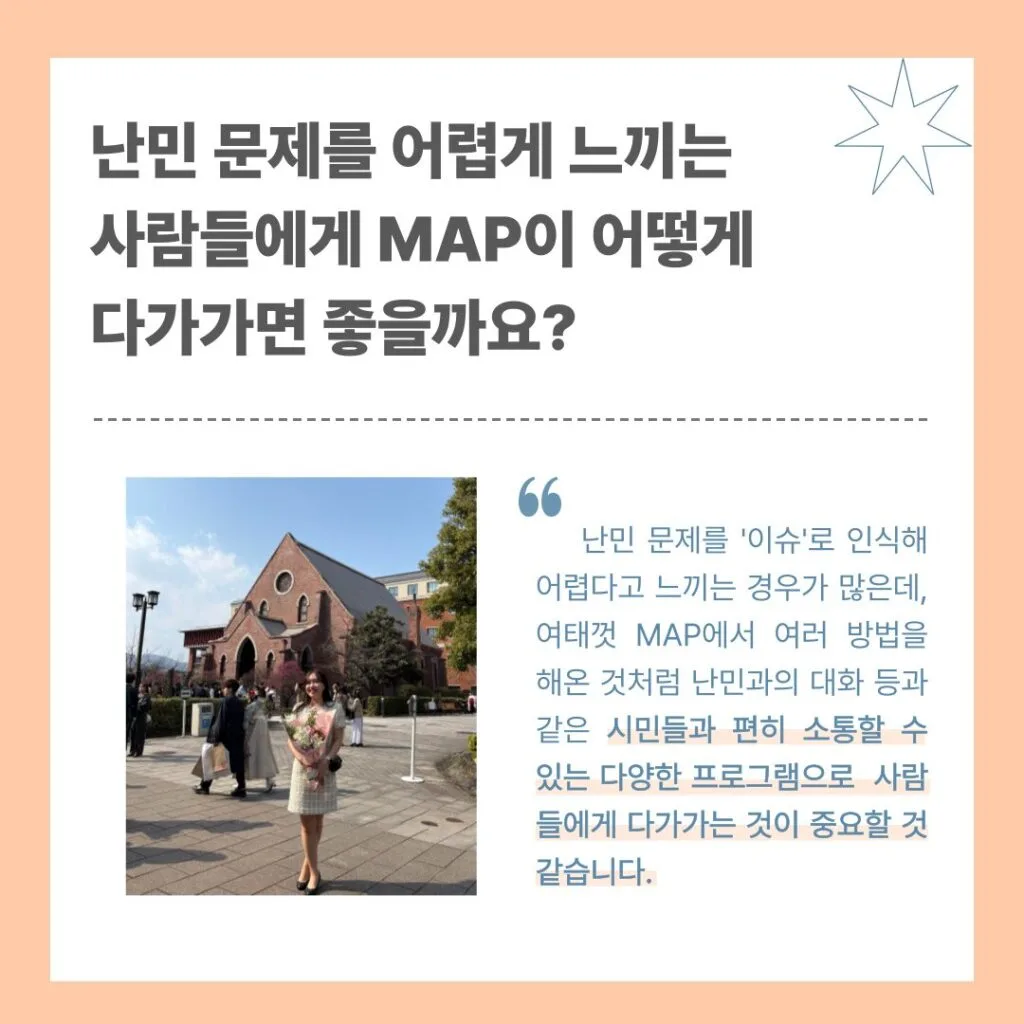
Q6. How do you think MAP should approach people who find the refugee issue difficult?
I think it is important to show naturally that refugees are people who live everyday lives like ours. As I once did myself, many people assume before getting to know refugees deeply that they are very different from themselves. Therefore, I think it is important to approach people continuously and in a friendly way by sharing refugees’ real stories and showing their life experiences, through MAP’s “Dialogue with Refugees” program as well as running the Instagram account and producing content.