Q1. Please give a brief self-introduction and share your motivation for applying to MAP!
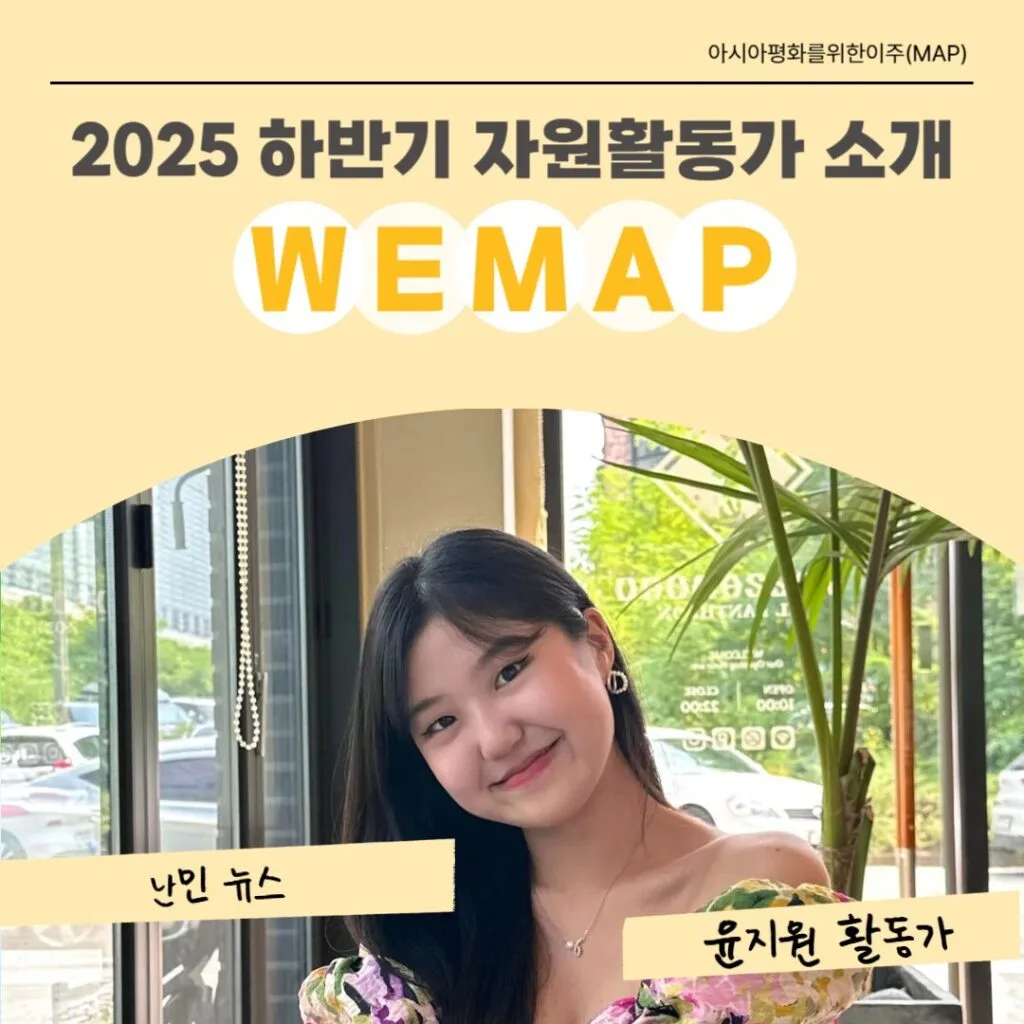
Hello! I am Yoon Ji-won, and I am on the Refugee News (RN) Team, which delivers information that refugees need :) Through teaching English to North Korean defectors, I became interested for the first time in the problems of unequal opportunity and structural exclusion. That experience led me to think about a society in which we understand our neighbors and live together, and these thoughts led me to MAP, so I applied.
Q2. What specifically do you do on your current team?
The Refugee News Team is in charge of delivering the information refugees need in an easy and clear way. As the team name suggests, the main work of the Refugee News Team is to produce and distribute news. The content of the news centers on seven categories, including health, policy, publicity, and statements, and the focus is on making all of the news easy for refugees to understand and relate to. We also pay attention to tone, and through the effort of making one-page posters we try to make sure that information reaches refugees effectively. Once the news is completed, it is translated into English, French, Arabic, Amharic, and Burmese and then distributed through Facebook and WhatsApp. Through this process the Refugee News Team delivers information to refugees.
Q3. What has been the most memorable moment for you so far?
The most memorable moment for me was when we covered the “exemption from the duty to report foreign nationals who are victims of unpaid wages.” In early September I first heard that the Ministry of Justice was discussing the system and made it into news, and not long ago, in early November, I heard that the system had actually been formally implemented. While covering the news at the discussion stage, I remember hoping that someday this system would be implemented and refugees would no longer suffer from unpaid wages. So when I saw that the system had actually been implemented, I could directly feel the change of society taking a step forward, and I came to hold hope for the future. Above all, it was very meaningful that I could share that hope with the refugees.
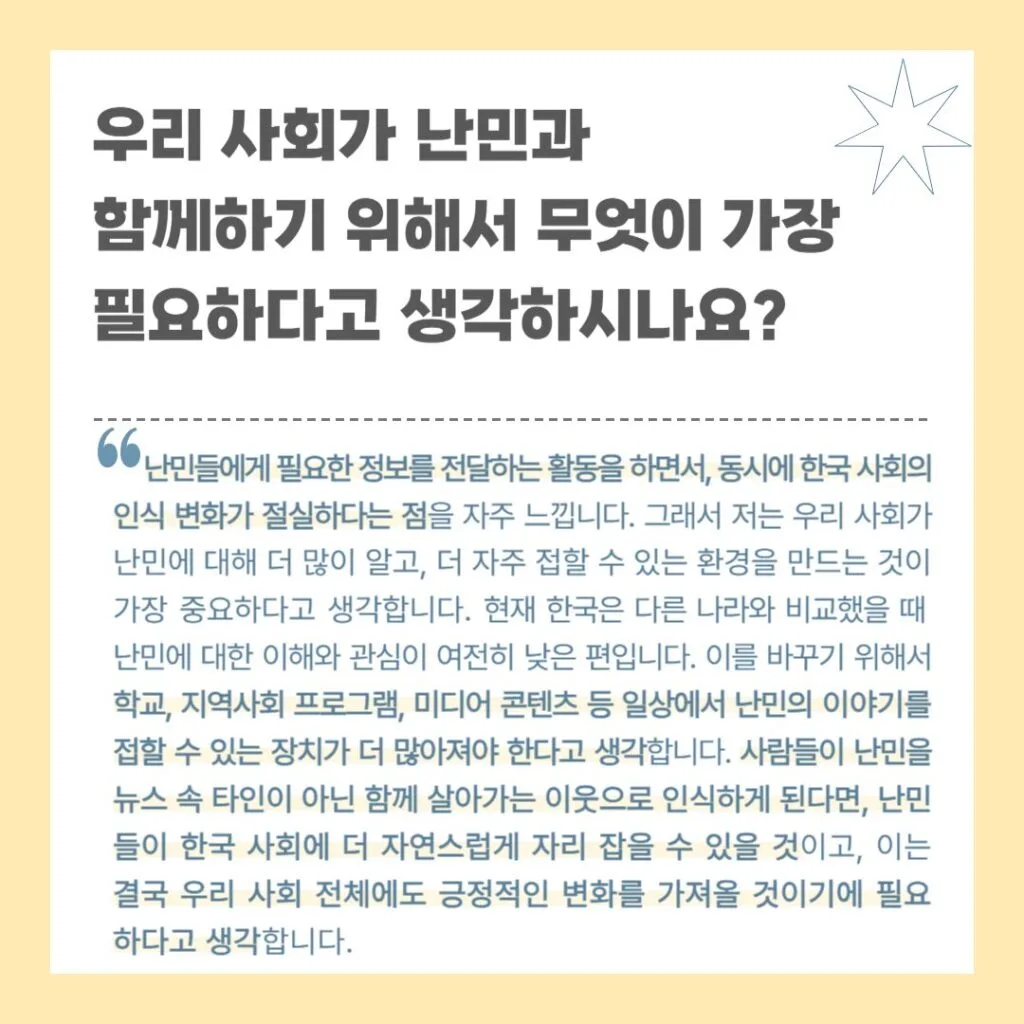
Q4. What do you think our society needs most in order to live together with refugees?
While doing the work of delivering the information refugees need, I often feel at the same time that a change in awareness in Korean society is urgently needed. So I think the most important thing is to create an environment in which our society can learn more about refugees and encounter them more often. At present, compared with other countries, understanding of and interest in refugees in Korea are still low. To change this, I think there need to be more means through which refugees’ stories can be encountered in everyday life, such as schools, community programs, and media content. If people come to see refugees not as strangers in the news but as neighbors living together with them, refugees will be able to settle into Korean society more naturally, and this will in the end bring positive change to our society as a whole, which is why I think it is necessary.
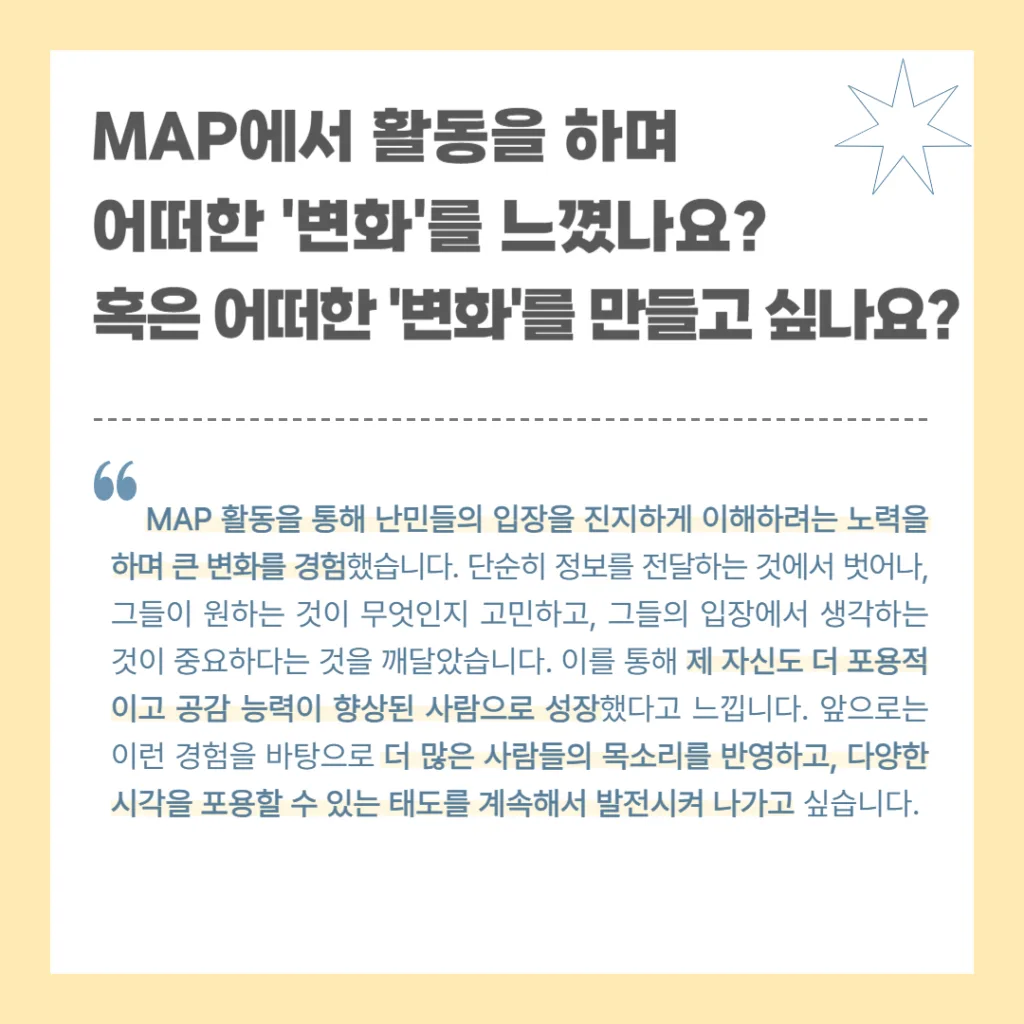
Q5. What ‘change’ have you felt while being active at MAP? Or what ‘change’ would you like to make?
Through my activities at MAP I experienced a great change by making an effort to seriously understand refugees’ positions. Moving beyond simply delivering information, I realized that it is important to think about what they want and to think from their point of view. Through this I feel that I have grown into a more inclusive person with greater empathy. In the future I want to build on these experiences and keep developing an attitude that reflects the voices of more people and embraces diverse perspectives.
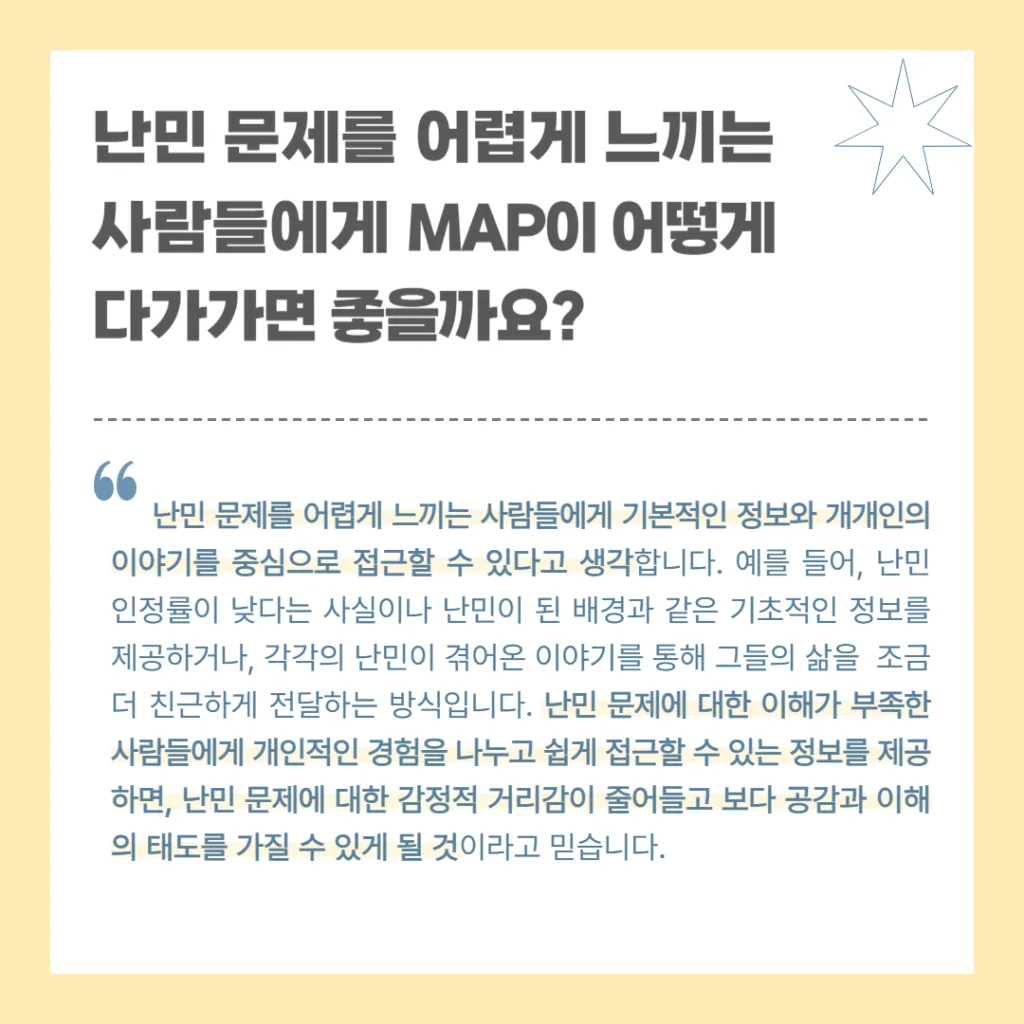
Q6. How do you think MAP should approach people who find the refugee issue difficult?
I think that for people who find the refugee issue difficult, MAP can approach them centered on basic information and individual stories. For example, it could provide basic information, such as the fact that the refugee recognition rate is low or the backgrounds from which people become refugees, or convey refugees’ lives in a more familiar way through the story each refugee has been through. I believe that if we share personal experiences and provide easily accessible information to people who lack understanding of the refugee issue, their emotional distance from the issue will shrink and they will be able to hold an attitude of empathy and understanding.