The member organizations of the Refugee Support Network and the United Nations High Commissioner for Refugees (UNHCR) decided to jointly hold capacity-building training for volunteers (interns) and activists this year. It is meaningful not only because activists can exchange with one another, but also because each organization can share its know-how in specific fields and discuss related concerns together. Two introductory training sessions have been held so far, and in June an in-depth training on a specific topic is planned.
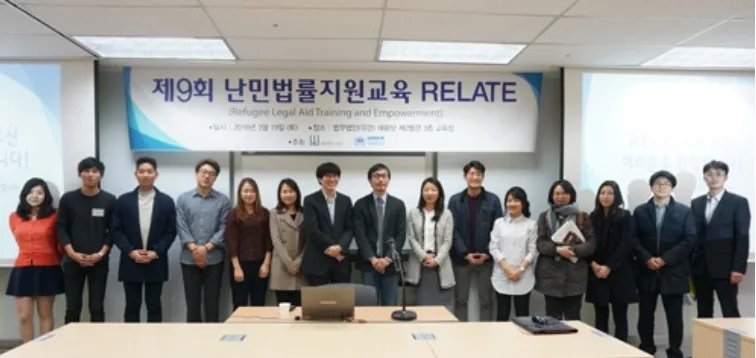
Refugee legal aid training program ReLATE (March 19, Bae, Kim & Lee LLC)
First, the introductory training began with the program of Dongcheon Foundation, a member of the Refugee Support Network. Dongcheon’s Refugee Legal Aid Training and Empowerment (hereinafter “ReLATE”) has mainly been offered to lawyers and law school students, and it involves cooperation between lawyers and activists at the stage of refugee litigation. The content of the training comprehensively covered an introduction to international refugee protection, the Refugee Act and the treatment of refugees, legal assistance practice in the refugee status determination process, and methods of researching refugees’ conditions in their home countries. MAP does not provide refugee legal aid directly, but it offers counseling and referrals to related institutions and organizations at refugees’ request, so it needs an understanding of the legal field. As a side remark, we should also make an effort so that social integration, which is MAP’s focus, is sufficiently addressed in the Refugee Act.
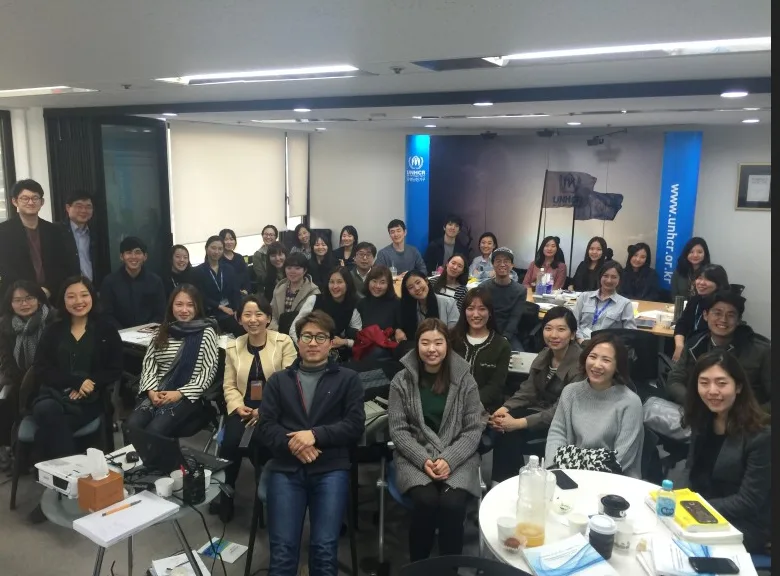
Refugee Network 2016 first-half volunteer training (March 25, UNHCR)
The training held at UNHCR on March 25 was intensive and lasted all day, with many volunteers from each organization taking part. The topics included not only legal aid but also livelihood support and refugee applications at ports of entry, which has recently become a problem, so it was broad training needed for refugee support work. For MAP, which is designing a growth support program for refugee youth and a higher and vocational education support program for young refugees, it was a useful time. I came to think that growth support for refugee youth should be approached from various perspectives such as the rights of migrant children, gender, culture and psychology, and that advice and participation from experts in many fields seem necessary to prepare concrete implementation plans. In addition, the situation of refugee detention in airport repatriation waiting rooms shared by Advocates for Public Interest Law (APIL), and the cases of detention of refugee families’ children in immigration detention centers shared by NANCEN (Refugee Rights Center), could only be deplored. Although there has been institutional progress in refugee protection in various respects, procedural protection is still inadequate, and the unreasonable and inhumane treatment of refugees by officials on the ground remains a great disappointment.
Summary of the first-half basic training content ■ Overview: refugee protection, refugee status determination procedures, key provisions of the domestic Refugee Act ■ Requirements for refugee status and treatment of refugees ■ Legal assistance practice in the refugee application and appeal process ■ Refugee litigation practice ■ COI (country of origin information) research techniques and practice ■ Livelihood support: medical care, psychological counseling, home visits, child support ■ Employment: the current state of refugee employment and desirable directions of support ■ Immigration: ports of entry, detention – Ports of entry: overview of the system of non-referral decisions for refugee applications, support for refugees in repatriation waiting rooms – Detention: front-line administration of the detention of refugee applicants. Requests for temporary release from detention, and cancellation of protection orders and deportation orders