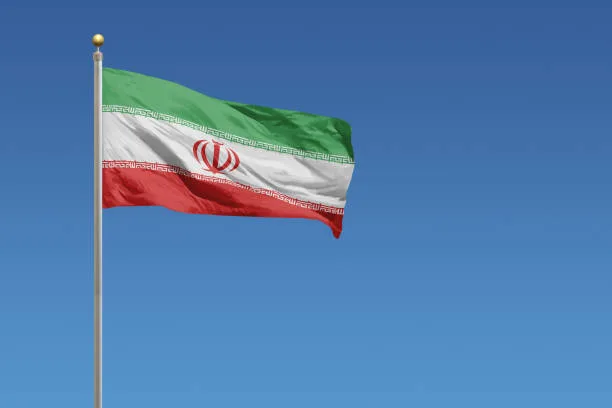
Case No. 1: Iran – Refusing to Open a Bank Account Based on Nationality Is Discrimination
An Iranian national living in Korea was denied the opportunity to open a bank account.
Today’s news explains why the National Human Rights Commission of Korea (NHRCK) called the bank’s conduct discrimination. Read it carefully!
1. Summary
What happened?
An Iranian national
has lived in Korea since August 2020 on a marriage migration visa (F-6 visa)
. He had been using his wife’s bank account but now wanted to open an account in his own name. While living in Korea, he has to go through credit checks for various public documents and everyday activities. Even though he explained the purpose of opening the account, the bank refused because of his Iranian nationality.
The bank
explained that during its customer due diligence process, an alert appeared indicating a “watch list filter.”
Therefore, it directed a policy of refusing to open new accounts for Iranian nationals.
The Iranian national believes it is unfair to restrict basic rights on the basis of a nationality that individuals did not choose. Therefore, he filed a complaint with the National Human Rights Commission of Korea.
2. Background
Why is Iranian nationality a problem?
Iran has been listed as a “terrorist state” by the Financial Action Task Force (FATF) since 2011.
What is the FATF?
The Financial Action Task Force (FATF) is an international organization that aims to prevent money laundering and the financing of terrorism. Simply put, it prevents countries from hiding or laundering money obtained through crime and prevents the financing of terrorist organizations.
Why does the FATF affect banks?
To understand this case, you need to understand the relationship between the FATF, the Korea Financial Intelligence Unit (koFIU), and banks. The FATF sets international financial standards and monitors member countries’ compliance. South Korea, as a member country, must follow these standards. The koFIU creates regulations and communicates them to banks. Banks receive advice and education so that they comply with these regulations.
✅In short, because the FATF listed Iran as a terrorist state, the koFIU regulations restricted account opening, which led the bank to refuse.
International relations also matter.
It cannot be denied that the relationship between the United States and Iran affects South Korea. After the United States imposed sanctions on Iran, two banks in South Korea restricted Iran’s access to assets.
However, the South Korean government recommended not restricting the everyday financial transactions of Iranian nationals despite these sanctions.
Why is Iran considered a terrorist state?
1️⃣Risk of terrorism financing
The Iranian regime actively finances terrorism at both the regional and global levels. The regime’s proxy groups, such as Hamas, Palestinian Islamic Jihad, Hezbollah, and the Yemeni Houthis, have long been engaged in destabilizing activities.
2️⃣Iran failed to comply with FATF standards.
Iran failed to enact conventions in line with FATF standards. Iran’s international banking is severely affected by its blacklisting by the FATF because FATF standards shape the banking policies of most countries and companies.
The National Human Rights Commission of Korea (NHRCK) stated that immediate refusal based solely on Iranian nationality is discrimination. It stressed that each case must go through individual verification to determine whether the transaction should proceed.
- Dispute
⚖️The Bank🏦 vs. the NHRCK
✅According to the koFIU regulations, the principle is to refuse transactions with individuals holding Iranian nationality, who are classified as being from a terrorist state.
✅The press release distributed by the koFIU after attending the FATF plenary session suggests taking proactive measures such as “suspension of transactions.”
✅It can be interpreted that the koFIU encouraged refusal as its basic policy. It says that banks can freely decide whether to continue a transaction or refuse it.
✅Once transactions are carried out with customers from a country suspected of terrorism such as Iran, various obligations are imposed. These responsibilities include reporting, custody, and vigilance with regard to the information of high-risk customers.
✅
Failure to fulfil these obligations may lead to various sanctions. This is why refusing transactions is unavoidable.
✅ If a particular bank accepted the opening of new accounts, it could attract a large number of Iranian nationals, leading to an increase in workload.
✅The koFIU stated that the banks misunderstood the regulations. It explained that refusing transactions and enhanced customer verification are two equal options, and that it never issued any instruction to refuse.
✅ An error occurred in the translation of the original text of the FATF public statement. The original text “restriction” was incorrectly translated as “suspension.”
✅Since no inquiry was submitted to the koFIU regarding the interpretation of the regulation, it is difficult to regard it as encouraging refusal.
✅ We acknowledge the obligation burden and the sanctions.
✅However, the koFIU stated that it is not an instruction for banks to reject the accounts but rather a standard obligation that banks should typically follow.
✅First, customer verification is a basic task.
✅ The number of Iranian nationals in South Korea is only about 2,100. Since many branches already open accounts for Iranian nationals, it is unlikely that they would be excessively concentrated in a single branch.
4. Conclusion
What is the decision of the NHRCK?
Decisions
1️⃣The bank’s action is considered “discrimination.”
The NHRCK stated that the bank’s refusal to open an account based solely on the person’s Iranian origin is considered a violation of the right to equality.
Since the bank refused without going through the minimum procedures, its reasons cannot be justified as reasonable.
2️⃣The procedures are considered complicated and unbalanced.
The bank refused to open the account for the sake of convenience, even though there was the option of either opening a restricted account or temporarily suspending the transaction.
Furthermore, most Iranian nationals are expected to engage in simple transactions related to daily life (according to data from the Ministry of Foreign Affairs and the Ministry of Justice).
Recommendations:
1️⃣Policy: Amending the procedures
The procedures need to be reviewed to ensure that financial transactions are refused only after individual customers have been verified.
It is not appropriate to refuse the majority of Iranian nationals without specific conditions.
2️⃣Practical measures: Education for banks
It is important to provide accurate information and to avoid causing pathological anxiety and overthinking.
Continuous education for banks through practical guidelines, legislation, and consultations related to actual work is essential.
3️⃣Public interest: Banks play a public role
Since financial companies have a public role, all banks must share the responsibility.
It is important to prevent the burden from being concentrated on specific institutions that accept Iranian nationals, for the sake of good faith and the public interest.
The bank account issue continues!
Asylum seekers living in Korea find it difficult to open bank accounts. Refugee News will compile several cases to create a series. We aim to help refugees who may face similar situations understand the general process and deal with it.
Want more Refugee News?