Settlement
Refugee News
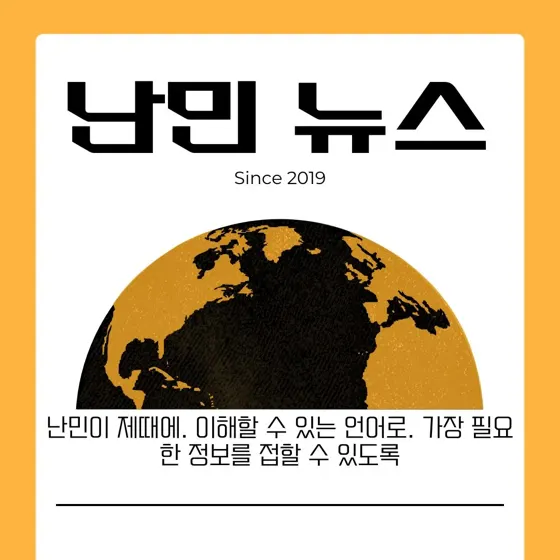
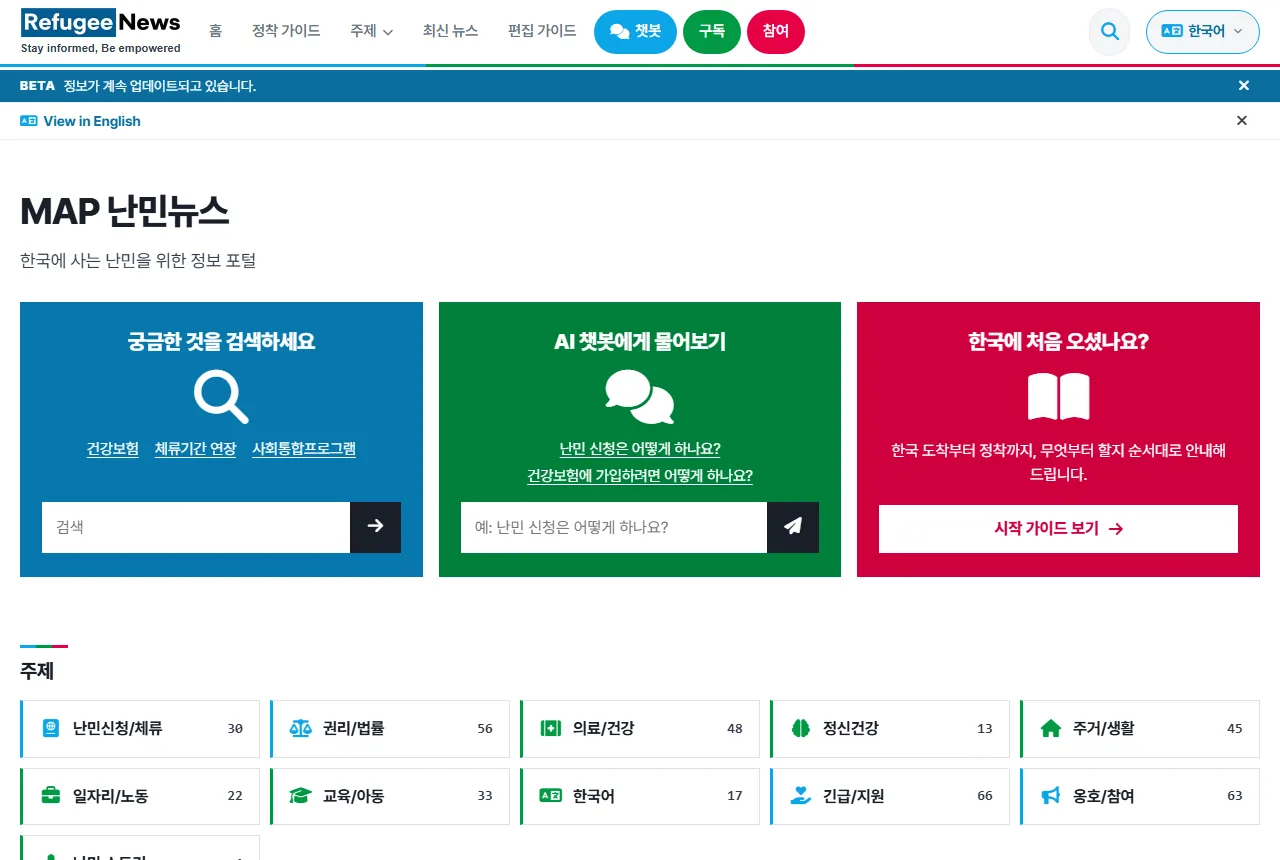
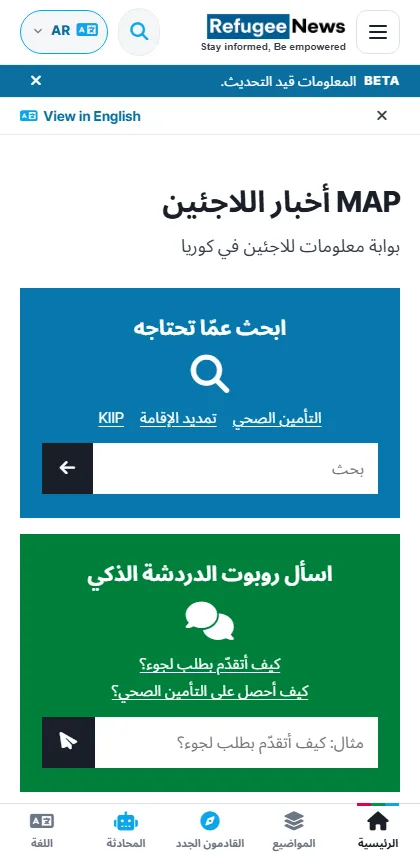
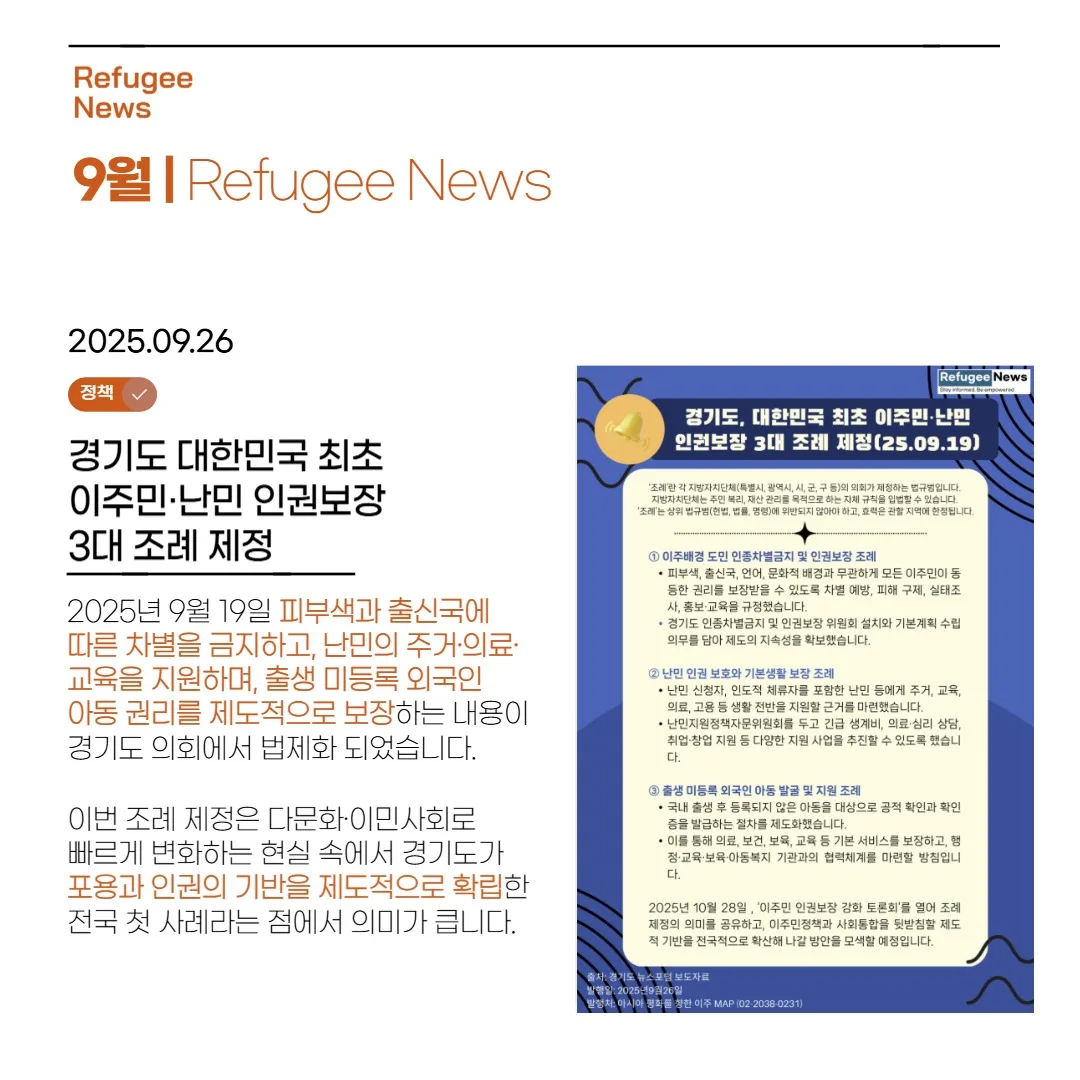
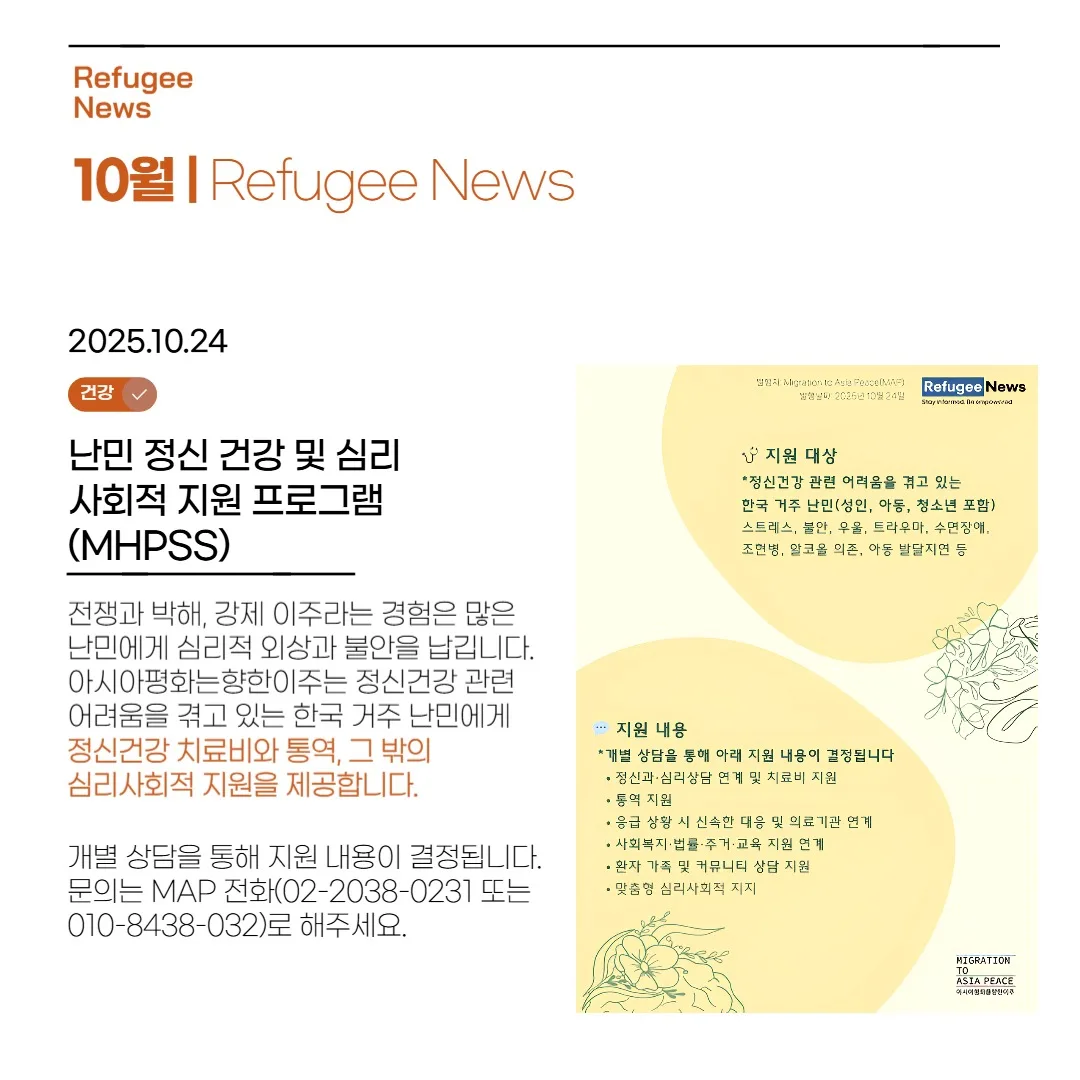
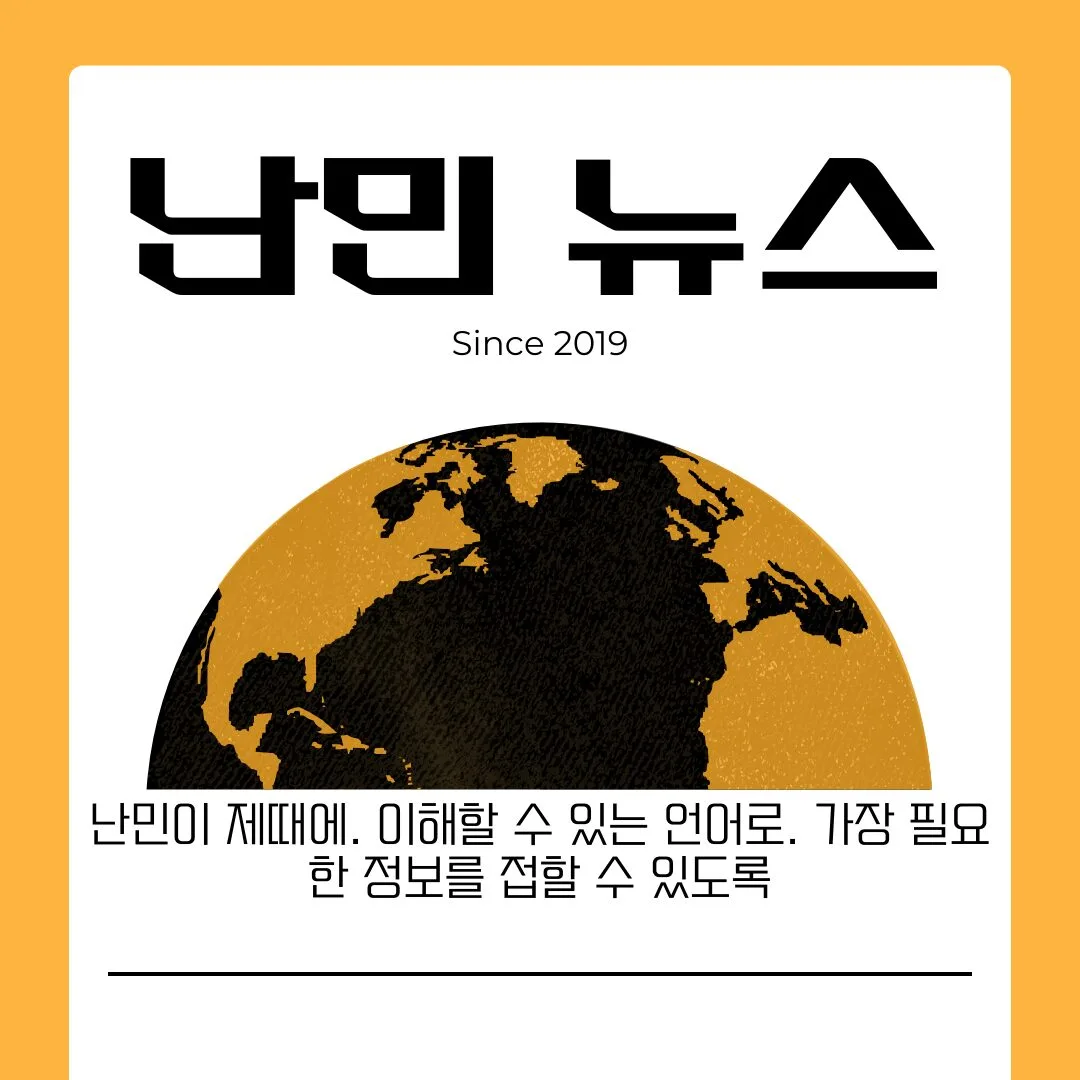
Since 2019, MAP has produced Refugee News, which delivers timely information in languages that refugees living in Korea can understand, on residence and refugee policy, health, daily life, human rights, and education and job opportunities. It began in Korean, English, Arabic and French, added Amharic and Burmese, and in 2026 opened the eight-language website refugeelifekorea.org. News reaches readers through the website, text messages, WhatsApp, Facebook and local community leaders.
Background
In a crisis, accurate information is as vital to survival as food or medical care. This is why international humanitarian organizations make “communication with communities” a core principle in their work with refugees. People can judge and decide for themselves when they receive information in a language they understand.
Refugees in Korea often receive information that bears directly on their lives, such as residence, health insurance, welfare and jobs, only in Korean. When COVID-19 spread in 2020, disaster alerts also came only in Korean, and in 2021, 106 of the 131 adult refugees MAP met said it was hard to get information about changes in immigration administration.
Since 2019, MAP has produced Refugee News, delivering essential information in languages and expressions refugees can understand. It checks government announcements and institutional changes and puts them into plain language, and it feeds the questions and opinions of refugee communities back into the news.
What we do
-
Producing multilingual Refugee News and the website
MAP verifies government announcements and official materials and delivers information on residence and refugee policy, health care, daily life, human rights, education and employment, and refugee stories in several languages. It began in 2019 and now runs in eight languages at refugeelifekorea.org.
-
Card news, web posters and distribution
MAP condenses information into one-page posters and card news that are short and easy to read, and delivers them through text messages, Facebook, WhatsApp and community leaders.
-
Easy-to-read information guide
MAP published the “Guide to Providing Easy-to-Read Information for Refugees” and applies it to Refugee News. In 2024, MAP also made the guide into giveaway items and handed out about 1,000 copies at the Korea Refugee Film Festival, the Hankuk University of Foreign Studies Model UN and Dialogue with Refugees events.
-
Refugee monitoring group and reader feedback
A refugee monitoring group evaluated Refugee News; now editors and reviewers check reader feedback received through the website and reflect it.
-
Refugee stories
MAP interviews refugees living in Korea directly, publishes their stories in their own voices, and collects them on the Refugee News website.
History
- 2019
MAP began with HEALTH NEWS. It put 17 topics, including health insurance enrollment, prenatal care, summer health care, flu vaccination, infant and child health checkups, and winter living, into 74 card news pages and distributed them 10 times in Korean, English, Arabic and French. From November, a volunteer Refugee News coordinator made the card news and posted it on the MAP Facebook page every one to two weeks. Earlier, in 2018, health news had been shared in English and Arabic 7 times with 286 people.
- 2020
When COVID-19 spread in February, MAP urgently translated information on quarantine and response policies, edited it to suit refugees, and shared it on social media. From then on, it published web poster news under the name Refugee News in four languages, 58 items over the year (33 on health, 9 on immigration and policy, 15 on daily life, and 1 other). Subscriptions to the health information alert service reached 211 households, and from October to December it delivered 13 card news items on 7 topics with Samsung Medical Center by social media and text message. A monitoring group of 10 refugees evaluated the news twice, in August and December, and scores rose from the previous year on all five items: timeliness, accuracy, readability, accessibility and usefulness. From September, MAP began posting in Arabic and French on mapcast.org.
- 2021
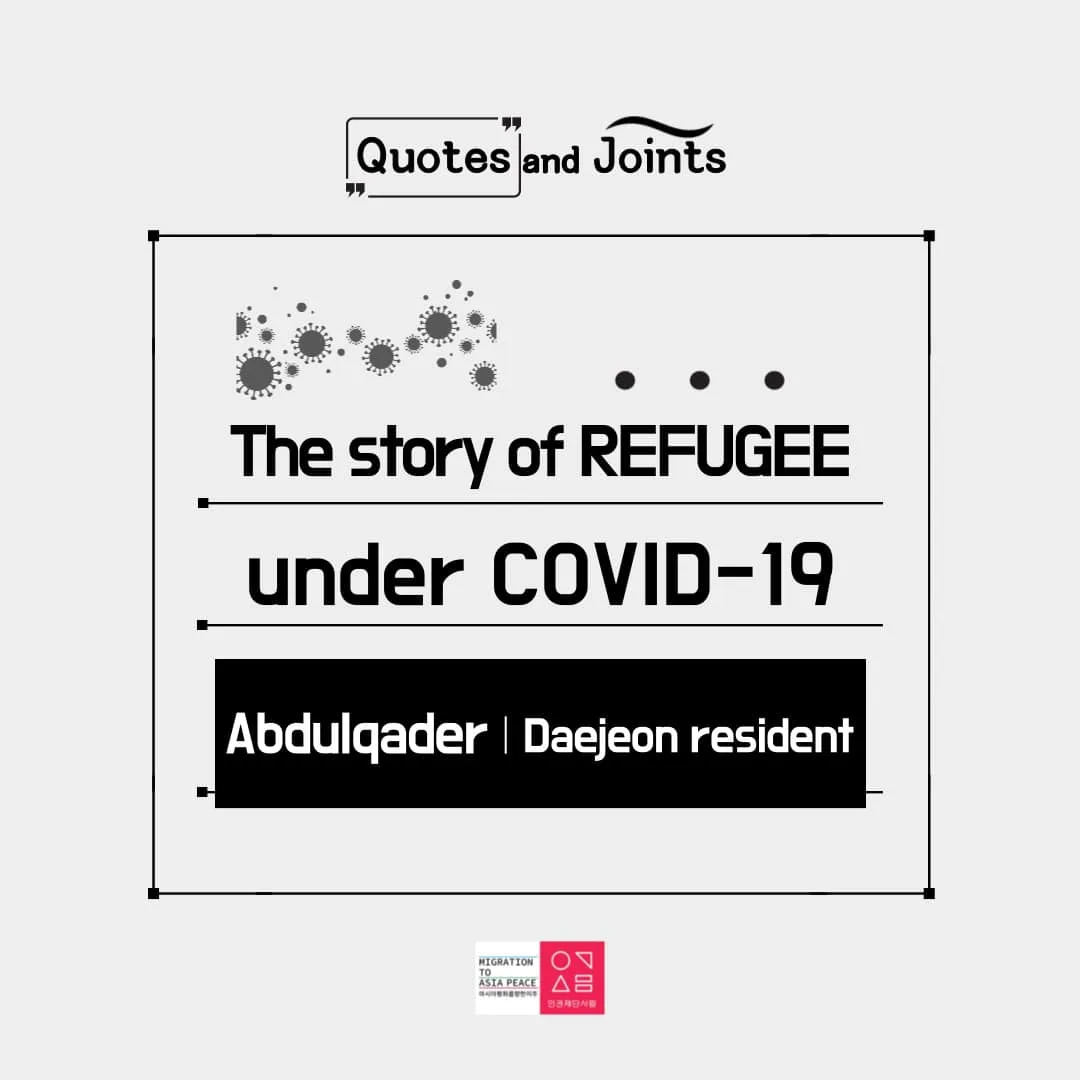
With Samsung Medical Center, MAP published 21 health card news items on COVID blues, suicide, sleep disorders, alcohol dependence, anxiety disorders, bipolar disorder and schizophrenia. It also ran 10 COVID-19 news items, 11 policy news items, 8 livelihood news items and 6 refugee interview news items. The number of people reached per health card news item ranged from 114 to 290 by language. MAP conducted a survey and interviews about refugees' experiences during COVID-19 and published the interviews as refugee story card news.
- 2022
MAP published 35 Refugee News items in four languages and produced some additional items in Amharic and Burmese. Besides refugee policy, immigration control policy, health and daily life information, it also covered higher education and opportunities for social participation. There were 243 text message subscribers and 244 WhatsApp subscribers. To hear subscribers' views, it ran two monitoring group surveys and one focus group discussion.
- 2023
MAP published 40 Refugee News items in the four main languages and produced some additional items in Amharic, Burmese and Chinese. It distributed them through the organization's website, Facebook, WhatsApp and the MAP text alert service, with 2,700 subscribers on Facebook, 275 on WhatsApp and 183 by text message.
- 2024
MAP published 55 Refugee News items. In May, it announced seven categories (health, policy, human rights, daily life, RISE, stories and outreach), biweekly publication, and a principle of breaking news for urgent issues. On World Refugee Day, June 20, it published version 1.0 of the Guide to Providing Easy-to-Read Information for Refugees and applied it to Refugee News, and the approach spread to MAP's other projects. When martial law was declared on December 3, it hurried out a newsletter in easy-to-read form. The number of people receiving Refugee News directly, counting Facebook followers, text message subscribers and WhatsApp group members together, grew from 2,698 to 3,562, with Arabic speakers the largest group, and feedback and requests for support about Refugee News increased.
- 2025
MAP opened separate Refugee News boards in Amharic (May) and Burmese (July) on mapcast.org. This year, excluding statements, Refugee News posts numbered 50 in Korean, 47 in English, 38 in French, 36 in Arabic, 16 in Burmese and 13 in Amharic. The volunteer RN team wrote the Korean news and made it into a one-page poster, then translated it into English, French, Arabic, Amharic and Burmese and distributed it by Facebook and WhatsApp. In December, it compiled and shared the keywords of the year's Refugee News.
- 2026
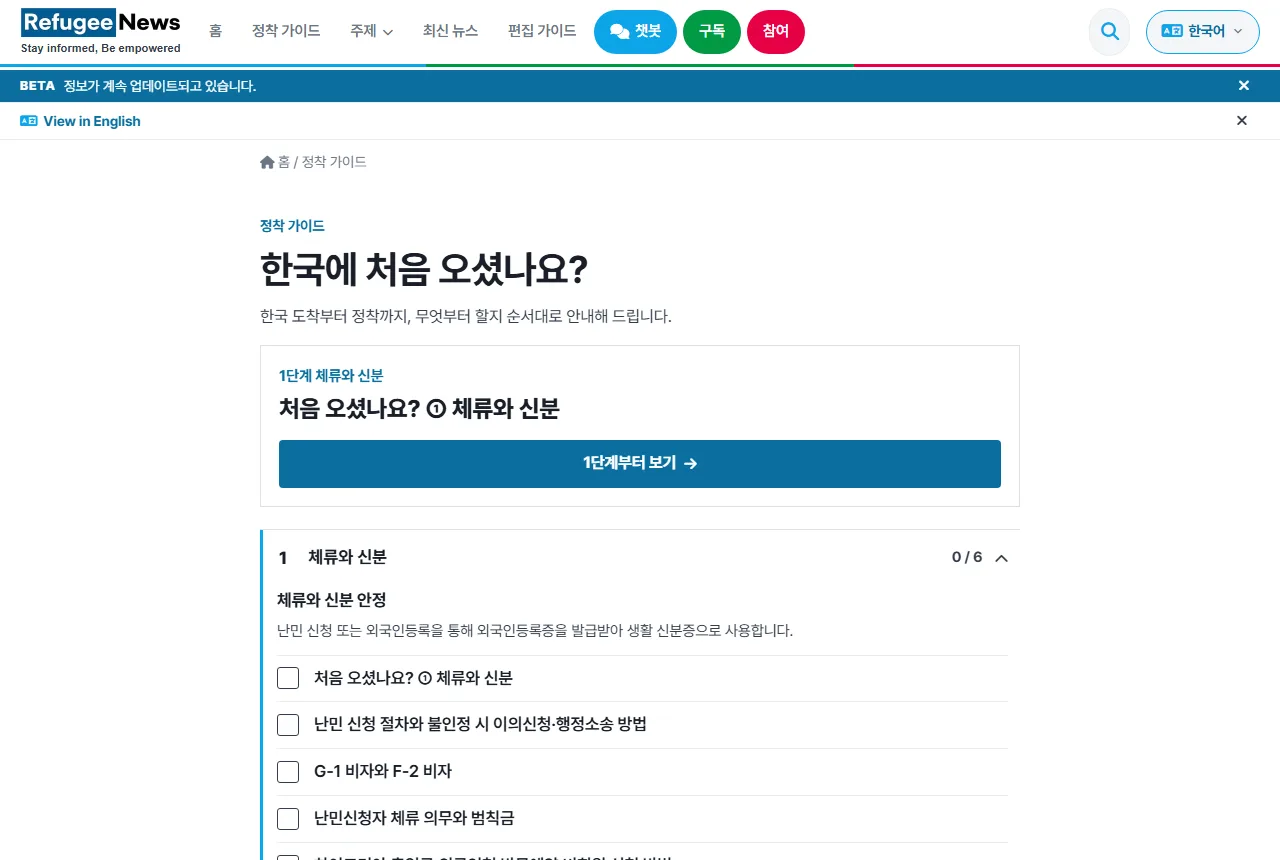
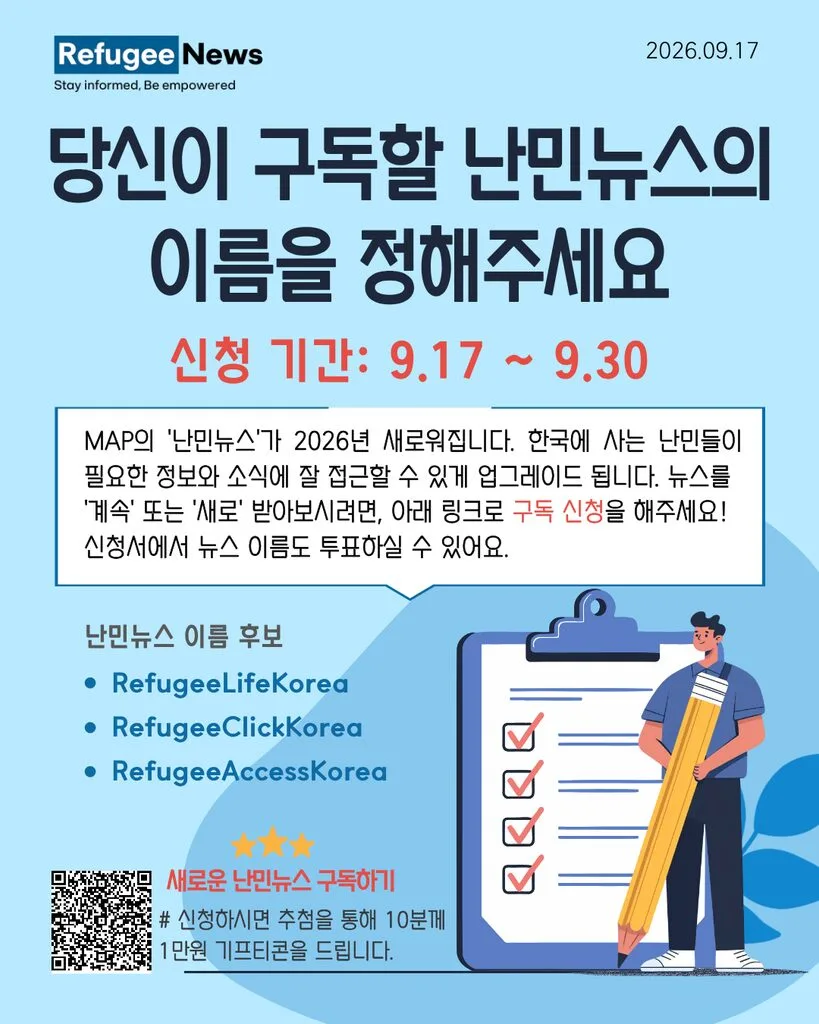
MAP redesigned Refugee News. In September, it took new subscription sign-ups and asked readers to vote on a new name among RefugeeLifeKorea, RefugeeClickKorea and RefugeeAccessKorea. It opened refugeelifekorea.org, a website in eight languages: Korean, English, French, Arabic, Amharic, Burmese, Russian and Persian.
How to apply
In numbers
- 8 years
- Since starting with health card news in 2019
- 8 languages
- Korean, English, French, Arabic, Persian, Russian, Amharic and Burmese
- 244 items
- Refugee News items published 2020-2024
- 2,700 people
- Facebook subscribers (2023)
Photos
Documents
Recent activities
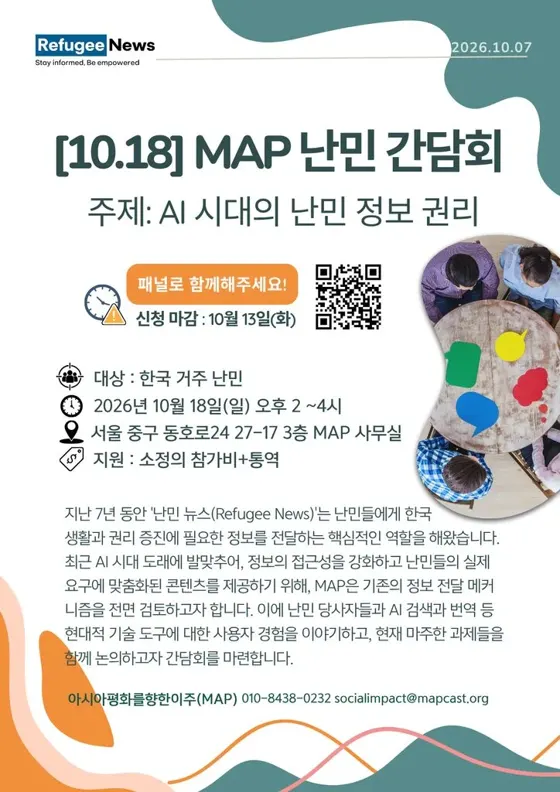
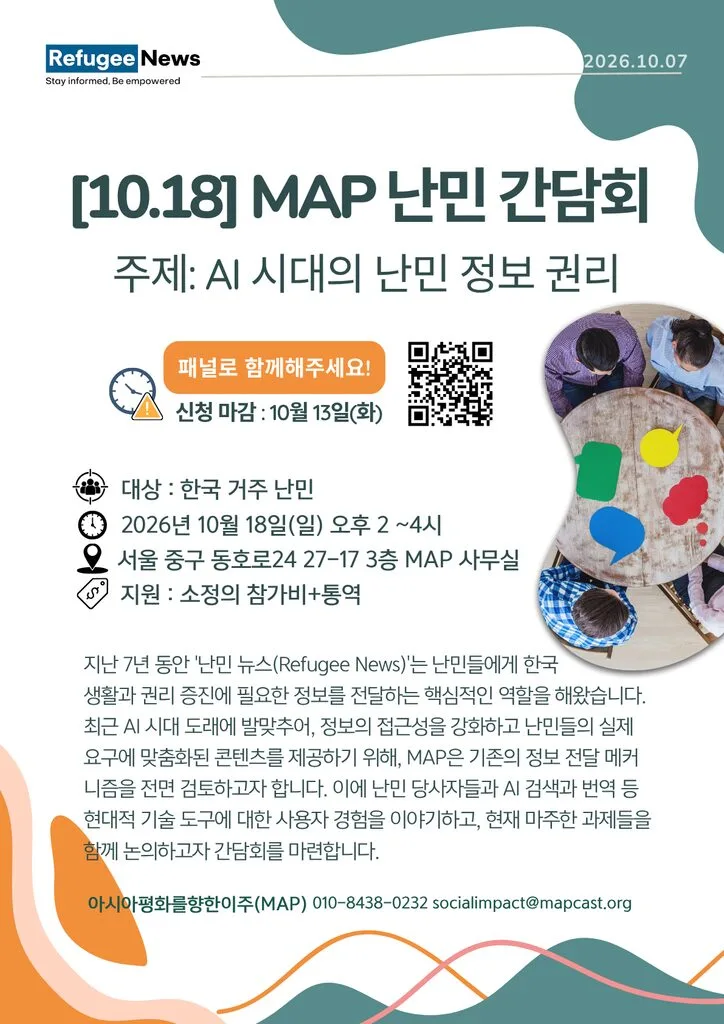
2026 MAP Refugee Forum (Theme: Refugees' Right to Information in the AI Era)
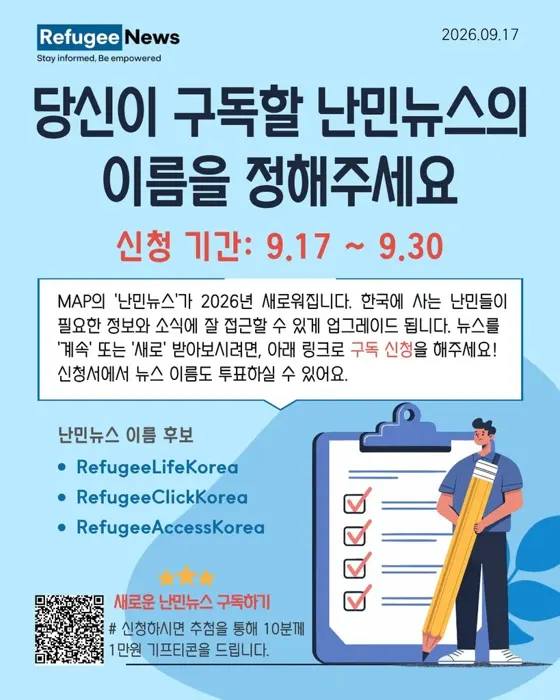
[Announcement] Help Choose the Name of the Refugee News You Will Subscribe To! (~9/30)
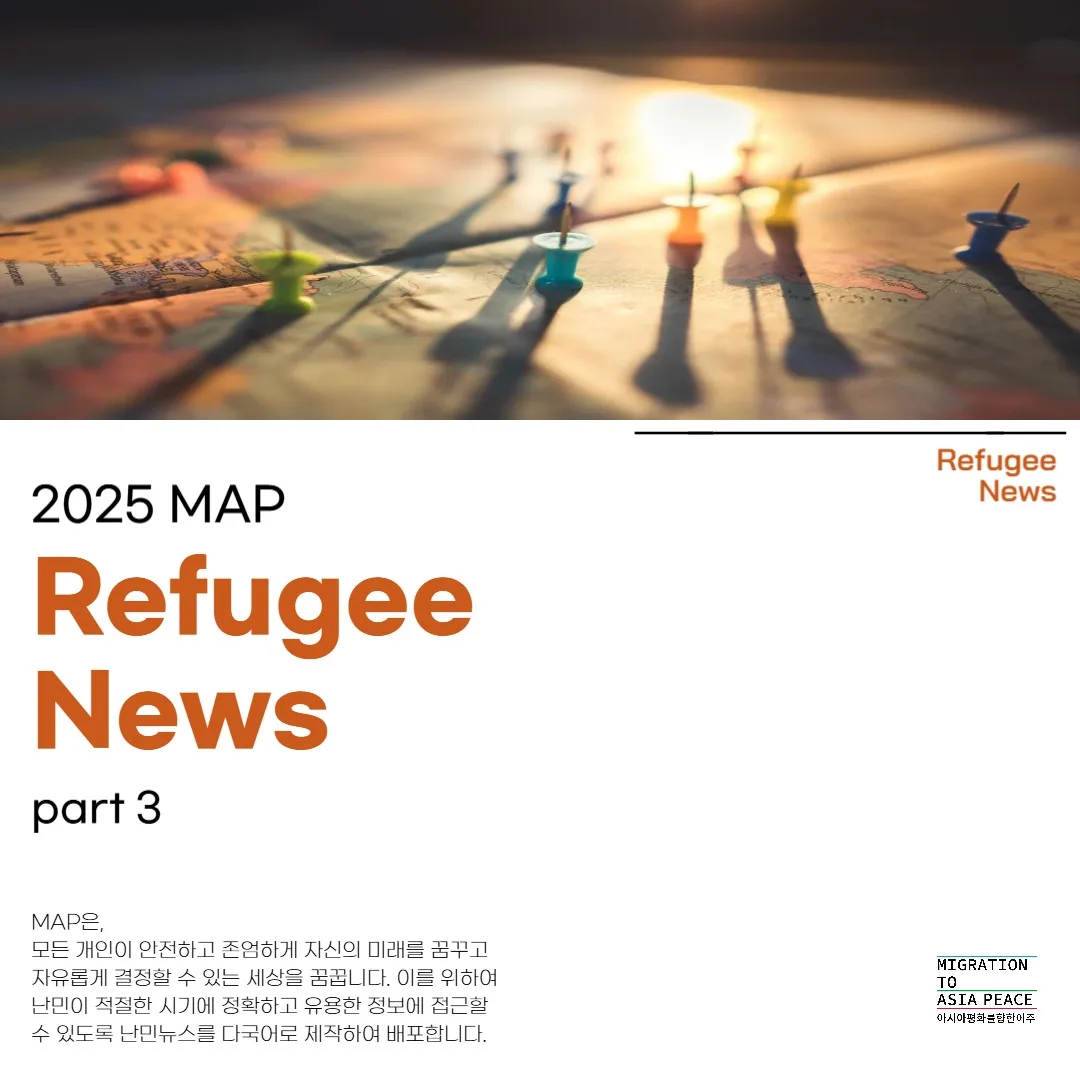
Refugee News keywords of 2025 (part 3)
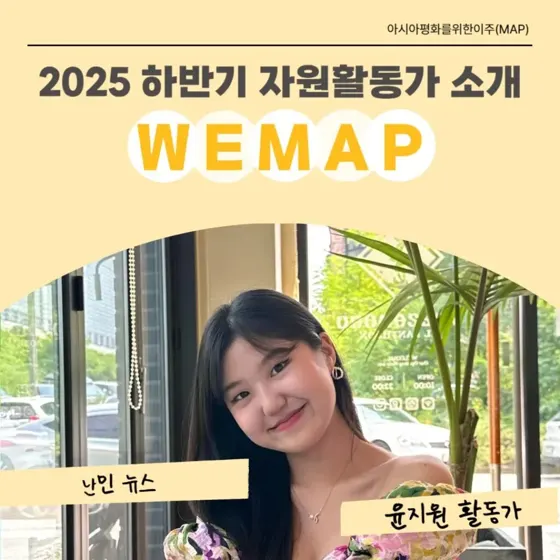
[2025 Second-Half Volunteer Introduction] Yoon Ji-won (Refugee News RN Team)
Refugee News RN Team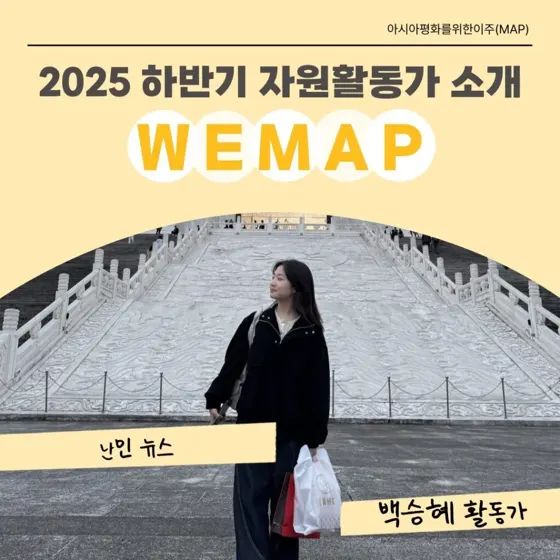
[2025 Second-Half Volunteer Introduction] Baek Seung-hye (Refugee News RN Team)
Refugee News RN TeamWe Have Published the <Guide to Providing Easy-to-Read Information for Refugees>!